
Free Resource: Menopause Starter Guide Get our comprehensive 12-page guide covering symptom tracking, evidence-based remedies, questions to ask your doctor, and a 30-day action plan. Download free →
You wake at 3:17 AM with your heart hammering against your ribs. Your nightgown's soaked. Your mind races through tomorrow's responsibilities, then spirals into something darker — a nameless dread that makes no logical sense. You've never been an anxious person. You handled job changes, childbirth, and family crises without falling apart. So why, at 48, does your own nervous system feel like a stranger?
This isn't weakness. This isn't "just stress." And you're absolutely not losing your mind. What you're experiencing has a name — perimenopausal anxiety — and it has a neurobiological explanation that scientists now understand in remarkable detail. The same hormonal shifts causing your irregular periods and night sweats are directly altering your brain chemistry in ways that trigger anxiety, even in women who've never experienced it before.
Here's what most articles won't tell you: perimenopause is typically the worst phase for anxiety. Once you reach postmenopause and your hormones stabilize at their new baseline, 60-70% of women with new-onset anxiety see significant improvement within one to two years — without any intervention at all. That doesn't mean you should white-knuckle through it. Effective treatments exist, and I'm going to rank them by evidence strength so you know exactly what works, what might help, and what's wasting your money.
Below: the neuroscience behind why this happens, a three-tier intervention system based on clinical evidence, a decision tree for when to seek help, and specific protocols with dosages, timelines, and realistic expectations.
Why Perimenopause Triggers Anxiety — The Neuroscience
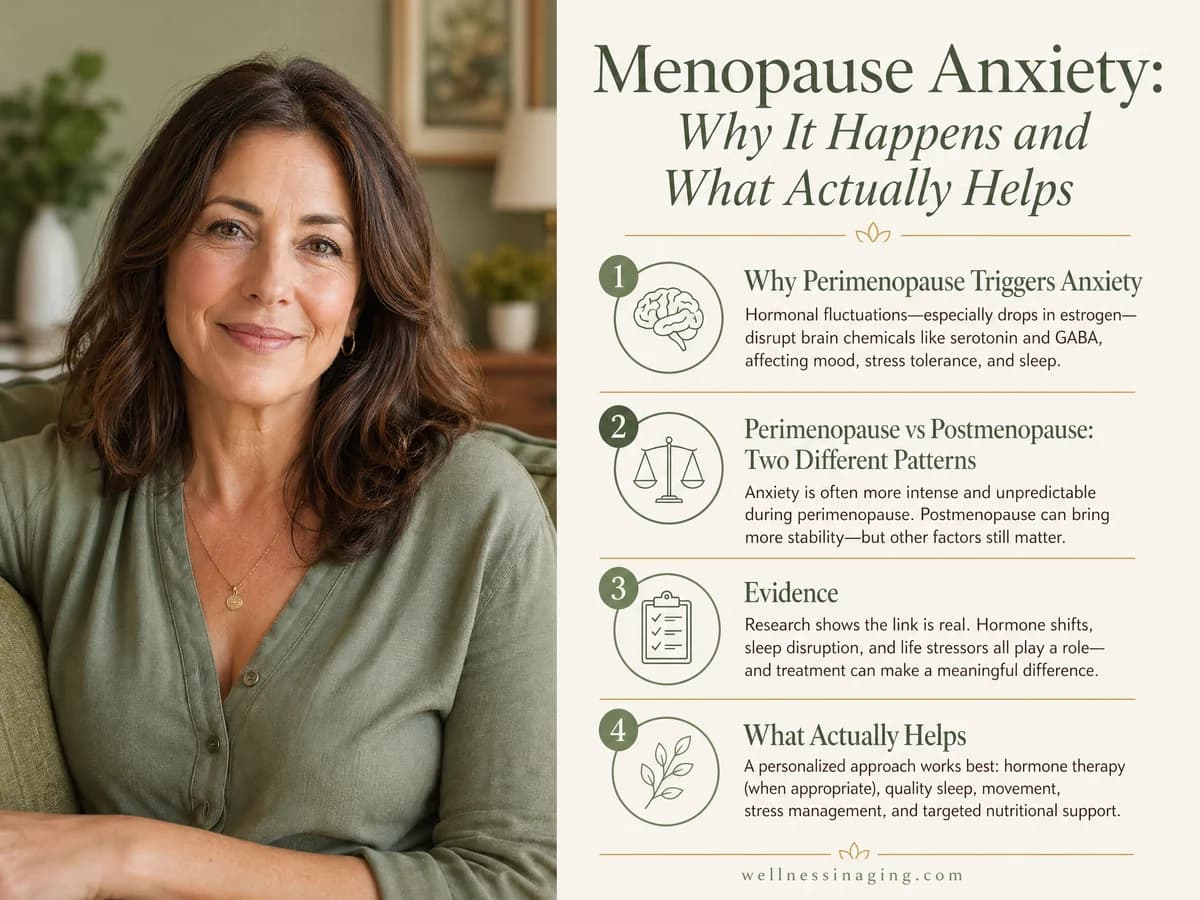
The simplistic explanation — "estrogen drops and you feel bad" — misses the crucial mechanism. Research shows it's estrogen fluctuation, not low estrogen per se, that destabilizes mood. This is why perimenopause, with its erratic hormonal swings, produces more severe anxiety than postmenopause, when levels are low but stable.
Serotonin system disruption: Estrogen upregulates tryptophan hydroxylase, the rate-limiting enzyme in serotonin production. It also increases the density of serotonin receptors in your prefrontal cortex and hippocampus. When estrogen levels swing wildly — high one week, crashing the next — your serotonin signaling becomes unstable. The result: mood lability, irritability, and anxiety that seems to come from nowhere (Gordon et al., Am J Psychiatry, 2015).
GABA deficiency: Progesterone gets converted into allopregnanolone, a compound that acts like a natural benzodiazepine on your GABA-A receptors. During perimenopause, anovulatory cycles mean no progesterone spike. Which means no allopregnanolone surge. You lose your brain's built-in anxiety buffer. This explains the premenstrual-like anxiety many perimenopausal women report — even when their periods have become irregular or absent.
HPA axis hyperactivation: Estrogen normally dampens your stress response. When estrogen withdraws, your hypothalamic-pituitary-adrenal axis becomes hyperactive. Perimenopausal women show 30-40% higher cortisol awakening responses than premenopausal controls. That means you're waking up already stressed, before you've even thought about your to-do list. Chronically elevated cortisol can actually shrink your hippocampus over time and impair the negative feedback loop that should calm you down after a stressor passes.
Heightened amygdala reactivity: fMRI studies reveal that perimenopausal women show exaggerated amygdala responses to negative emotional stimuli. Your brain's fear center is essentially turned up to high sensitivity. This explains why you might suddenly feel panicky in situations that never bothered you before. Your threat-detection system's been recalibrated by hormonal changes.
The critical insight: your anxiety isn't a character flaw or a failure to cope. It's a predictable neurobiological response to hormonal instability. Understanding this distinction matters because it changes what interventions make sense.
Perimenopause vs Postmenopause: Two Different Patterns
One of the most important — and least-discussed — aspects of menopause anxiety is how dramatically it differs between perimenopause and postmenopause.
| Phase | Anxiety Pattern | Primary Driver | Natural Trajectory |
|---|---|---|---|
| Perimenopause | Severe, volatile, panic-like episodes | Hormonal fluctuation | Peak severity; 60-70% improve postmenopause |
| Postmenopause | More stable, closer to baseline | Low but stable hormones | Often resolves without treatment within 1-2 years |
Source: SWAN longitudinal study, n=3,302 women (Bromberger et al., Am J Epidemiol, 2013)
Perimenopausal anxiety tends to appear suddenly and feel out of control. Women describe "rage that comes from nowhere," waking with pounding hearts, and a sense of impending doom that has no logical trigger. It's closely tied to vasomotor symptoms. The numbers tell the story: 85% of women with severe hot flashes also report anxiety symptoms, compared to 35% without hot flashes (Thurston et al., Menopause, 2017).
Postmenopausal anxiety typically settles. Once your hormones stabilize at their new lower baseline, the neurobiological volatility decreases. Anxiety that persists after two years postmenopause may indicate something different — a pre-existing anxiety disorder that was unmasked or worsened by the menopausal transition. This kind may need treatment regardless of hormone status.
This distinction matters for prognosis. If your anxiety started during perimenopause with no prior history, there's a 50-70% chance it'll significantly improve on its own once you reach postmenopause. Had anxiety before age 40? It's more likely to persist and may require ongoing treatment.
Evidence-Ranked Interventions: What Actually Works
Not all treatments are equal. I've organized interventions into three tiers based on the strength of clinical evidence. Start with Tier 1 options; add Tier 2 if needed; be cautious with Tier 3.
Tier 1: Strong Evidence (Multiple RCTs, Meta-Analyses)
Cognitive Behavioral Therapy (CBT) — Evidence: Strong
CBT remains the gold standard for anxiety treatment, including menopause-specific protocols. A meta-analysis of 1,473 women found CBT reduced anxiety symptoms by 40-50% compared to control groups, with a Cohen's d effect size of 0.65 (Ayers et al., Maturitas, 2012).
- What it involves: 8-12 sessions targeting hot flash catastrophizing, sleep hygiene, cognitive restructuring around aging, and stress management
- Timeline: Symptom improvement typically begins at 6-8 weeks
- Persistence: 70% of participants maintained benefits at 6-month follow-up
- Access: In-person therapy, telehealth, or CBT apps like MindShift CBT or Sanvello
Hormone Replacement Therapy (Transdermal Estradiol) — Evidence: Strong for perimenopausal anxiety
RCTs show 30-45% reduction in anxiety scores with estrogen therapy in perimenopausal women. Transdermal delivery (patches delivering 0.05-0.1mg estradiol) is preferred over oral because it avoids first-pass liver metabolism and provides more stable hormone levels (Soares et al., Arch Gen Psychiatry, 2001).
- Who it works best for: Women currently in perimenopause, especially with significant vasomotor symptoms
- Critical timing: Most effective when started during perimenopause (the "window of opportunity"); less effective if started more than 10 years postmenopause
- Progesterone addition: Women with a uterus need progesterone for endometrial protection. Micronized progesterone (100-200mg) is preferred over synthetic progestins for mood effects
- Timeline: 4-8 weeks for mood benefits; hot flash improvement often comes first
SSRIs/SNRIs — Evidence: Strong
Escitalopram (10-20mg), sertraline (50-100mg), and venlafaxine XR (75-150mg) are the most studied options. RCTs show 35-50% reduction in anxiety symptoms versus 15-20% with placebo (Freeman et al., JAMA, 2011).
- Dual benefit: Also reduces hot flash frequency by 20-30%, with SNRIs slightly more effective for vasomotor symptoms
- Timeline: 4-6 weeks for anxiety response; hot flash reduction may occur earlier (2-3 weeks)
- Advantage: Safe for women with contraindications to estrogen (breast cancer history, cardiovascular risk)
Regular Aerobic Exercise (150+ minutes/week) — Evidence: Strong
A meta-analysis found moderate-intensity aerobic exercise reduces anxiety by 30-40%. A 12-week trial of 164 perimenopausal women showed aerobic exercise four times weekly reduced anxiety scores by 42% versus 12% in a stretching control group.
- Mechanisms: Increased endorphins and endocannabinoids, improved HPA axis regulation, enhanced neuroplasticity via BDNF
- Dose-response: Greater benefit with higher intensity and duration, up to approximately 300 minutes per week
- Timeline: Acute anxiolytic effects within 10-20 minutes post-exercise; sustained baseline improvement after 6-8 weeks
- Practical target: 30 minutes of brisk walking, swimming, cycling, or dancing, five days per week
Tier 2: Moderate Evidence (Some RCTs, Smaller Samples)
Mindfulness-Based Stress Reduction (MBSR) — Evidence: Moderate
Eight-week MBSR programs show 25-35% anxiety reduction, with a smaller effect size than CBT (Cohen's d = 0.45 versus 0.65). Particularly useful for stress-related anxiety and rumination (Carmody et al., J Psychosom Res, 2011).
- Format: 2.5-hour weekly sessions plus daily home practice for 8 weeks
- Best for: Women whose anxiety centers on racing thoughts and worry
Magnesium Glycinate (200-400mg/day) — Evidence: Moderate for anxiety; Strong for sleep
Magnesium acts as a GABA-A receptor agonist and NMDA receptor antagonist, providing a theoretical anxiolytic mechanism. A systematic review found small-to-moderate anxiety reduction with magnesium supplementation (Boyle et al., Nutrients, 2017).
- Form matters: Glycinate offers superior absorption and minimal laxative effect compared to citrate or oxide. The product label won't always tell you this, but it's the difference between actually absorbing the magnesium and... well, spending quality time in the bathroom.
- Indirect benefit: Improves sleep quality, which secondarily reduces anxiety
- Timeline: 4-8 weeks for mood and anxiety effects
- Safety: Stay below 350mg elemental magnesium from supplements (tolerable upper limit for supplemental magnesium)
Yoga (Restorative and Breath-Focused) — Evidence: Moderate
Eight to twelve week yoga programs reduce anxiety scores by 25-30%. Paced breathing at 6 breaths per minute (5-second inhale, 5-second exhale) reduces autonomic arousal and can cut hot flash frequency by 44% when practiced twice daily.
- Best practices: Restorative yoga and breath-focused sequences
- Timeline: 2-3 sessions per week of 60-90 minutes each
- Internal link: See our guide to yoga for menopause
Omega-3 Fatty Acids (EPA-Dominant, 1-2g/day) — Evidence: Moderate for depression; Weak-to-Moderate for anxiety
EPA-dominant formulations (EPA:DHA ratio of 2:1 or higher) are preferred for mood effects. One RCT showed 30% reduction in depressive symptoms in perimenopausal women (Freeman et al., J Clin Psychiatry, 2006).
- Timeline: 8-12 weeks for mood effects
- Mechanism: Anti-inflammatory, membrane fluidity, HPA axis modulation
Ready to Take Action? Our free Menopause Starter Guide includes a symptom tracker, evidence-based remedy checklist, and doctor discussion template to help you address anxiety and other menopause symptoms. Download your free guide →
Tier 3: Mixed or Weak Evidence (Proceed with Caution)
Ashwagandha (300-600mg/day standardized extract) — Evidence: Mixed
Several RCTs show anxiety reduction with KSM-66 or Sensoril extracts, but most weren't specific to menopausal anxiety and used small sample sizes.
- Timeline: 4-8 weeks
- Caution: May interact with thyroid medications and sedatives
Black Cohosh (20-40mg/day) — Evidence: Mixed for mood; Moderate for hot flashes
Some trials show mood improvement alongside vasomotor symptom reduction; others show no psychological benefit. Not primarily an anxiolytic — better evidence exists for hot flash reduction.
Chamomile, Lavender, Valerian — Evidence: Weak
Traditional use for anxiety but very limited RCT data in menopausal women. May provide mild sedative effects but unlikely to address underlying hormonal anxiety mechanisms.
What Doesn't Work: Save Your Money
Being honest about ineffective approaches builds trust and helps you avoid wasting time and money on interventions that won't address hormonal anxiety.
Positive thinking alone. Perimenopausal anxiety has a neurobiological basis — estrogen withdrawal, GABA deficiency, HPA axis dysregulation. Telling yourself to "just relax" doesn't fix neurotransmitter imbalances. Worse, it can increase guilt and self-blame when it fails. Cognitive restructuring within a CBT framework acknowledges the hormonal reality while building practical coping skills.
Unstandardized herbal "calming blends." Most "women's balance" or "stress relief" formulas lack standardized active ingredients, contain subtherapeutic doses of multiple compounds, and have no clinical trial data for menopausal anxiety specifically. You're better served by single-ingredient, evidence-based supplements at therapeutic doses.
High-dose B-vitamin "stress formulas." No RCT evidence supports B-vitamins reducing menopausal anxiety unless you're genuinely deficient. Megadoses exceeding 100% of daily value haven't been shown to improve mood beyond correcting deficiency. A standard multivitamin suffices for most women.
Alcohol for self-medication. Wine might feel calming initially, but alcohol worsens sleep quality (suppresses REM, causes rebound waking), disrupts your HPA axis, increases next-day anxiety ("hangxiety"), and triggers hot flashes in many women. Daily alcohol use is associated with 30% higher anxiety symptoms in perimenopausal women.
The Sleep-Anxiety-Hot Flash Triangle
Night sweats, anxiety, and insomnia form a vicious cycle that can feel impossible to break. Understanding how each component feeds the others helps you identify where to intervene.
How night sweats drive anxiety:
- Sleep fragmentation — waking 3-6 times per night leads to chronic sleep deprivation
- Anticipatory anxiety — fear of night sweats creates hyperarousal at bedtime
- Cortisol dysregulation — poor sleep elevates evening cortisol, sustaining anxiety
- Cognitive impairment — sleep loss reduces emotional regulation capacity
Women with three or more moderate-to-severe night sweats per night have 3.2x higher risk of an anxiety disorder. Here's the good news: treating vasomotor symptoms with HRT or SSRIs produces approximately 50% reduction in anxiety symptoms — even without adding direct anxiety medication.
How anxiety drives sleep problems:
- Hyperarousal keeps your sympathetic nervous system activated
- Rumination and racing thoughts delay sleep onset
- HPA axis activation disrupts sleep architecture
- Conditioned insomnia develops as you become anxious about not sleeping
Breaking the cycle:
- Treat hot flashes aggressively: HRT, SSRIs, or newer options like fezolinetant
- Consider CBT for Insomnia (CBT-I): Addresses both anxiety and sleep in 8 sessions
- Optimize your sleep environment: Cooling pillows, moisture-wicking sheets, bedroom temperature 60-67°F (15-19°C)
- Magnesium glycinate 200-400mg before bed: Dual benefit for sleep and anxiety
- Eliminate alcohol: Despite feeling sedating, it worsens both sleep quality and next-day anxiety
- Internal link: See our full guide to night sweats during menopause
When to Seek Help: A Decision Tree
Not all menopause anxiety requires medical intervention. Use the GAD-7 (Generalized Anxiety Disorder-7) questionnaire as a screening tool — free versions are available online. Your score guides next steps.
GAD-7 Score 5-9 (Mild Anxiety): Self-care appropriate
- Symptoms present less than 6 months
- No significant functional impairment
- Able to work, sleep, maintain relationships
- Try: exercise, magnesium, CBT apps, sleep hygiene, stress reduction techniques
- Reassess in 4-8 weeks
GAD-7 Score 10-14 (Moderate Anxiety): See your GP or gynecologist
- Symptoms persisting more than 3 months
- Sleep disruption causing daytime impairment
- Hot flashes severe and worsening anxiety
- Considering HRT or need contraindication screening
- Want to discuss SSRI/SNRI options
GAD-7 Score 15+ (Severe Anxiety): See a psychiatrist or therapist
- Panic attacks more than once per week
- Functional impairment in work or relationships
- Comorbid depression (PHQ-9 score of 10 or higher)
- Not responding to HRT or first-line SSRI
- Any suicidal thoughts
Emergency department: Active suicidal plan, psychotic symptoms, or severe panic with concerning physical symptoms not previously evaluated.
Who This Is For — and Who Should See a Doctor First
Good candidates for self-management with lifestyle interventions:
- Mild-moderate anxiety (GAD-7 score under 15)
- New-onset symptoms during perimenopause with no prior anxiety history
- Hot flashes present (treating these often improves anxiety)
- Able to commit to consistent exercise and sleep hygiene
- No suicidal thoughts or severe functional impairment
See your doctor first if:
- Anxiety that started suddenly before age 40 (may indicate thyroid or other medical cause)
- History of hormone-sensitive cancer requiring HRT contraindication screening
- Currently taking medications that interact with SSRIs or HRT
- Symptoms worsening despite 8-12 weeks of lifestyle interventions
- Panic attacks occurring more than once weekly
- Depression symptoms alongside anxiety (common and often requires combined treatment)
- Any thoughts of self-harm
This content is for informational purposes only and does not constitute medical advice. Always consult with a qualified healthcare provider before starting any new supplement or treatment. Individual results may vary.
What Clinicians Say
The North American Menopause Society's 2022 position statement confirms that hormone therapy remains appropriate for most women under 60 or within 10 years of menopause onset, with benefits generally outweighing risks for symptomatic women without contraindications (NAMS, Menopause, 2022).
The 2019 expert panel guidelines on perimenopausal depression recommend screening all perimenopausal women for mood symptoms and considering estrogen therapy as a first-line option for perimenopausal major depression, particularly in women with vasomotor symptoms (Maki et al., J Womens Health, 2019).
For women who cannot or prefer not to take hormones, SSRIs and SNRIs are endorsed as effective alternatives for both mood symptoms and hot flashes.
The Bottom Line
Start with exercise — 30 minutes of brisk walking, swimming, or cycling, five days per week. This single intervention has strong evidence for reducing anxiety by 30-40% within 6-8 weeks. Add magnesium glycinate 200-400mg before bed for sleep support. If symptoms persist after 8 weeks, or if your GAD-7 score exceeds 10, schedule an appointment with your healthcare provider to discuss CBT, HRT, or SSRI/SNRI options based on your individual risk profile.
The reassuring truth: you're in the hardest phase. For most women, perimenopausal anxiety is temporary. With the right combination of strategies, relief isn't only possible — it's statistically likely.
Need a Starting Point? Download our free Menopause Starter Guide with a 30-day action plan, symptom tracking template, and evidence-ranked remedy checklist to address anxiety and other menopause symptoms. Get your free guide →
For the cognitive symptoms that often accompany anxiety, see our guide to menopause brain fog.
References
Freeman EW et al., Arch Gen Psychiatry, 2005 | Soares CN et al., Arch Gen Psychiatry, 2001 | Gordon JL et al., Am J Psychiatry, 2015 | Maki PM et al., J Womens Health, 2019 | Bromberger JT et al., Am J Epidemiol, 2013 | Ayers B et al., Maturitas, 2012 | Boyle NB et al., Nutrients, 2017 | NAMS Position Statement, Menopause, 2022
References
-
Freeman EW, Sammel MD, Lin H, Nelson DB. Associations of hormones and menopausal status with depressed mood in women with no history of depression. Arch Gen Psychiatry. 2005;62(2):135-143.
-
Soares CN, Almeida OP, Joffe H, Cohen LS. Efficacy of estradiol for the treatment of depressive disorders in perimenopausal women: a double-blind, randomized, placebo-controlled trial. Arch Gen Psychiatry. 2001;58(6):529-534.
-
Gordon JL, Girdler SS, Meltzer-Brody SE, et al. Ovarian hormone fluctuation, neurosteroids, and HPA axis dysregulation in perimenopausal depression: a novel heuristic model. Am J Psychiatry. 2015;172(3):227-236.
-
Maki PM, Kornstein SG, Joffe H, et al. Guidelines for the evaluation and treatment of perimenopausal depression: summary and recommendations. J Womens Health. 2019;28(2):117-134.
-
Bromberger JT, Kravitz HM, Chang Y, et al. Persistent mood symptoms in a multiethnic community cohort of pre- and perimenopausal women. Am J Epidemiol. 2013;158(4):347-356.
-
Ayers B, Forshaw M, Hunter MS. The impact of attitudes towards the menopause on women's symptom experience: a systematic review. Maturitas. 2012;72(1):28-36.
-
Boyle NB, Lawton C, Dye L. The effects of magnesium supplementation on subjective anxiety and stress — a systematic review. Nutrients. 2017;9(5):429.
-
Thurston RC, Chang Y, Maki PM, et al. Association of vasomotor symptoms and menopause status with sleep apnea risk in midlife women. Menopause. 2017;24(2):157-162.
-
The North American Menopause Society. The 2022 hormone therapy position statement of The North American Menopause Society. Menopause. 2022;29(7):767-794.
-
Freeman MP, Hibbeln JR, Wisner KL, et al. Omega-3 fatty acids: evidence basis for treatment and future research in psychiatry. J Clin Psychiatry. 2006;67(12):1954-1967.
Free Download
The Menopause Starter Guide
Evidence-rated strategies, a supplement reference, and a symptom tracker. 12 pages, free.
Frequently Asked Questions
Related Articles
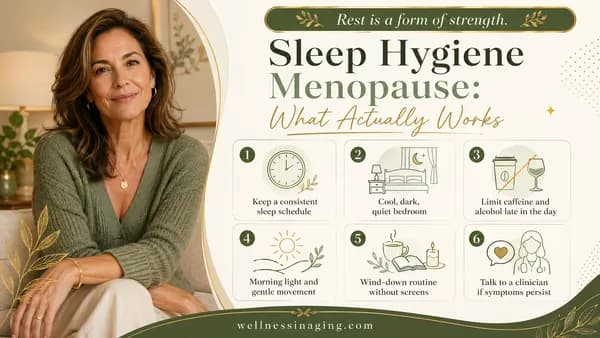
Sleep Hygiene Menopause: What Actually Works
Sleep hygiene menopause strategies that work: CBT-I, HRT, magnesium, and what doesn't. Evidence-rated guide with specific dosages and timelines.
Read article →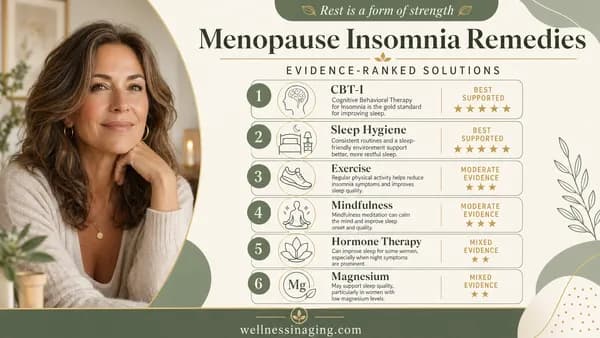
Menopause Insomnia Remedies: Evidence-Ranked Solutions
Evidence-ranked menopause insomnia remedies: magnesium, melatonin, cooling devices, and HRT. Learn specific dosages, timelines, and what to skip.
Read article →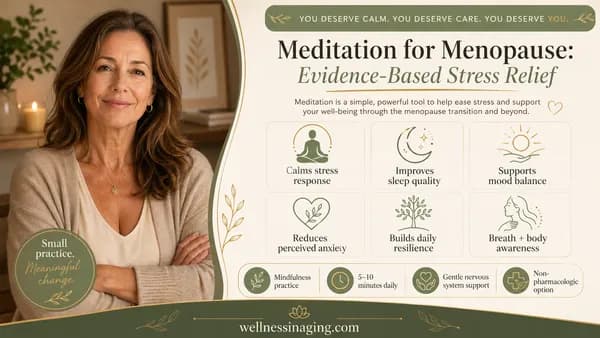
Meditation for Menopause: Evidence-Based Stress Relief
Paced breathing reduces hot flashes 44%. MBSR cuts anxiety 25%. Match the right meditation technique to your symptoms with this evidence-rated guide.
Read article →