
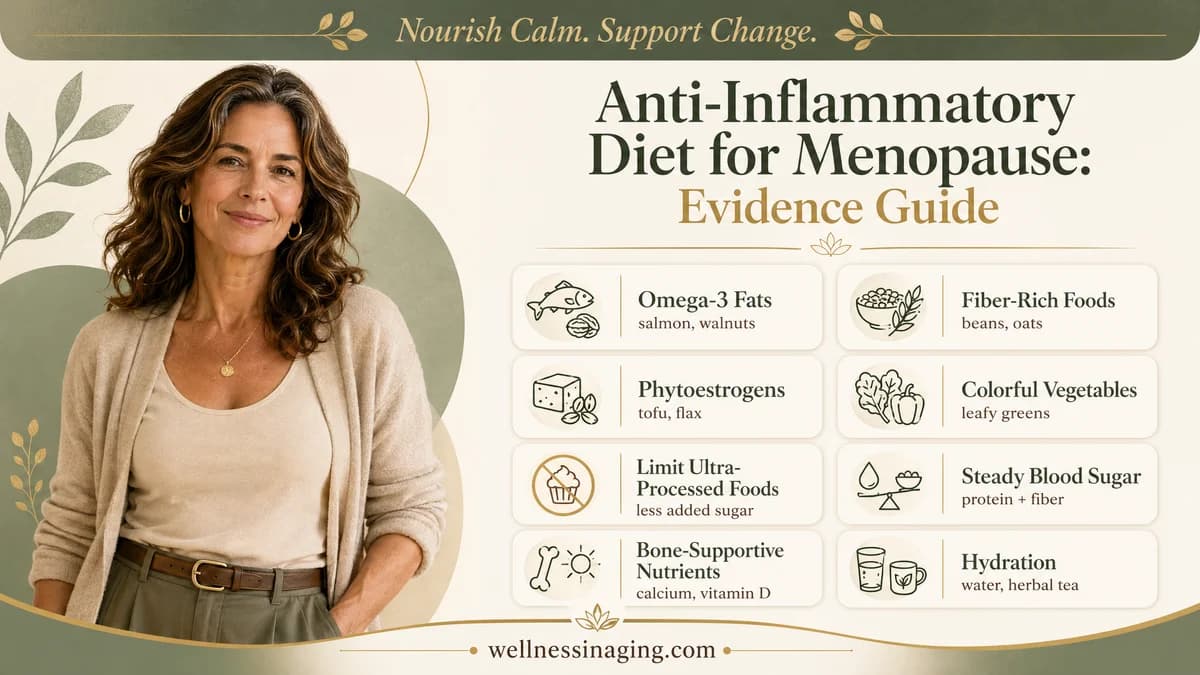
You wake up at 3am drenched in sweat, and by noon your knees ache like you aged a decade overnight. Your doctor mentions inflammation, but nobody explains what that actually means for menopause — or what to do about it beyond vague advice to "eat healthy."
Most articles miss this: the same estrogen drop causing your hot flashes is also removing a natural anti-inflammatory brake your body has relied on for decades. Without it, inflammatory markers rise 25-35% on average. That chronic low-grade inflammation — sometimes called "inflammaging" — doesn't just make you feel older. It actively worsens hot flashes, joint pain, brain fog, weight gain, and cardiovascular risk.
The practical implication is specific: certain foods measurably reduce inflammation, while others measurably increase it. Below: the mechanism connecting estrogen to inflammation, the foods with actual clinical evidence for menopause symptoms, four dietary patterns compared head-to-head, and a week of meals you can start tonight.
Why Inflammation Gets Worse After Menopause
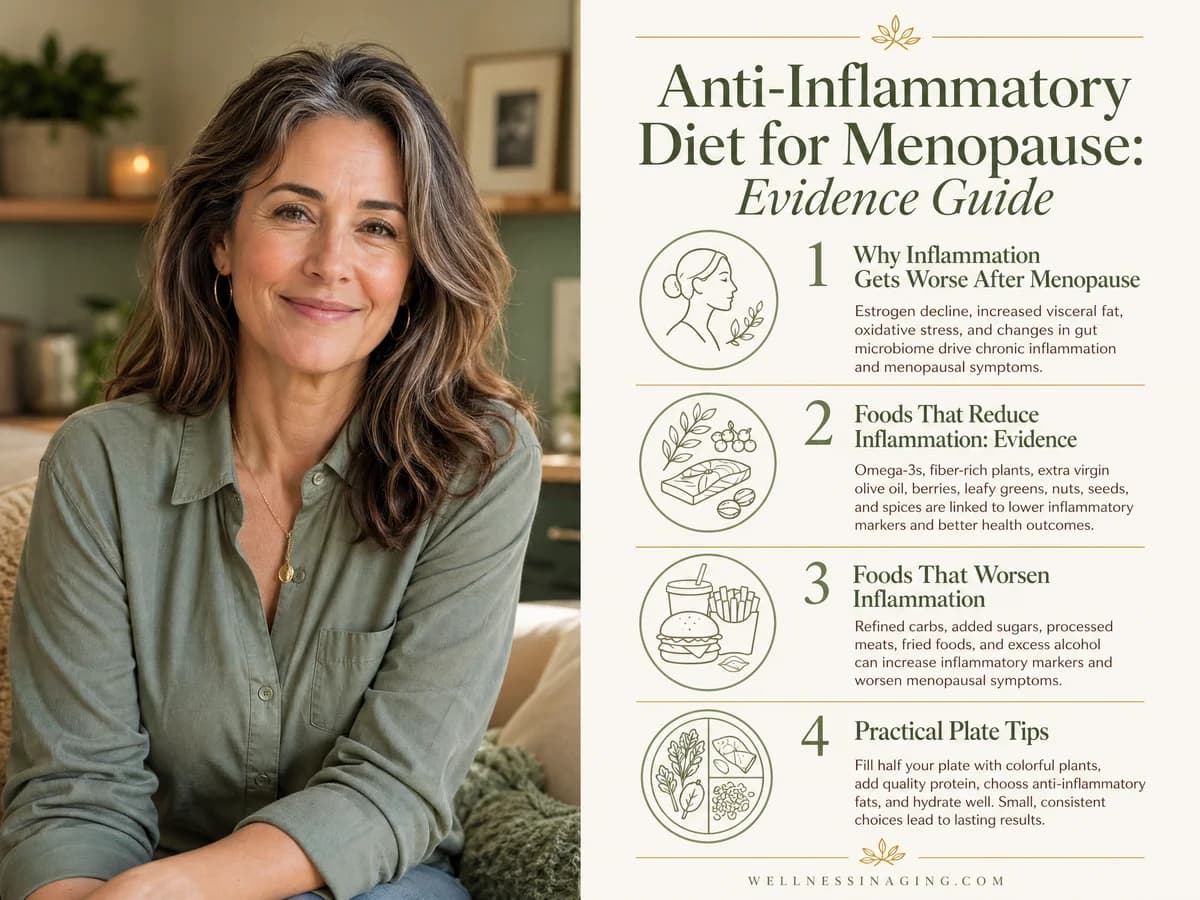
Estrogen does more than regulate your menstrual cycle. It actively suppresses inflammatory cytokines — signaling molecules like IL-6, TNF-alpha, and C-reactive protein (CRP) that drive inflammation throughout your body. When estrogen falls during perimenopause and menopause, these inflammatory markers rise significantly.
Research from Pfeilschifter and colleagues (2002) found postmenopausal women have 25-35% higher levels of CRP, IL-6, and TNF-alpha compared to premenopausal women, independent of age and body mass index. This isn't subtle. It's a measurable change that affects multiple body systems simultaneously.
The clinical consequences are specific. Elevated IL-6 and TNF-alpha affect the hypothalamus — the brain region controlling body temperature — and narrow the thermoneutral zone. A 2011 study by Thurston found women with frequent hot flashes (6+ per day) had CRP levels of 2.8 mg/L versus 1.6 mg/L in women without hot flashes. The inflammation isn't just correlating with symptoms. It's mechanistically driving them.
Joint pain follows a similar pattern. Estrogen has direct anti-inflammatory effects on joint tissue, and its decline unmasks inflammatory pathways that were previously suppressed. Roughly 46% of perimenopausal women report new-onset joint pain, often bilateral in the hands, knees, and shoulders.
An anti-inflammatory diet intervention reduced joint pain scores by an average of 35% in menopausal women over 12 weeks (Shinto et al., 2014). (Evidence: Moderate)
Getting Started: If you're new to navigating menopause symptoms and want a comprehensive starting point, the Menopause Starter Guide covers symptom tracking, supplement dosages, and essential questions for your next doctor visit.
The weight gain many women experience during menopause creates a feedback loop. Visceral fat — the deep abdominal fat that increases during the menopause transition — actively secretes pro-inflammatory cytokines. Women gain an average of 5-8% body fat during the transition, and much of it concentrates around the abdomen. This fat isn't metabolically neutral. It's an inflammatory organ that perpetuates the cycle.
Foods That Reduce Inflammation: Evidence-Rated
Not all anti-inflammatory foods are created equal. Some have strong clinical evidence in menopausal women specifically. Others have theoretical benefits but limited direct research. Here's what the evidence actually shows.
Fatty Fish and Omega-3s — Evidence: Strong
Omega-3 fatty acids (EPA and DHA) compete with arachidonic acid for the COX-2 enzyme, reducing production of inflammatory prostaglandins. They also produce resolvins — molecules that actively resolve inflammation rather than just blocking it.
The SWAN study found women eating fish two or more times per week had 25% fewer vasomotor symptoms (Wolff et al., 2013). A 12-week randomized trial using 1.8g EPA+DHA daily reduced hot flash frequency by 1.58 episodes per day compared to placebo (Lucas et al., 2009). That's meaningful relief for many women.
Practical targets:
- Fatty fish (salmon, mackerel, sardines, herring): 3.5 oz serving provides 1.5-2.6g omega-3
- Aim for 2-3 servings per week minimum
- Plant sources (flaxseed, chia, walnuts) provide ALA, which converts to EPA/DHA at only 5-10% efficiency — helpful, but not enough as your sole source
Extra Virgin Olive Oil — Evidence: Strong
Oleocanthal, a polyphenol in extra virgin olive oil, has COX-inhibiting properties similar to ibuprofen. The PREDIMED trial — one of the largest dietary intervention studies ever conducted — showed Mediterranean diet with extra virgin olive oil reduced cardiovascular events by 30% and inflammatory markers by 30-40% in postmenopausal women (Estruch et al., 2013).
Practical targets:
- 2-3 tablespoons daily
- Use for cooking at low-medium heat and for drizzling on vegetables
- Quality matters here: "extra virgin" contains the polyphenols; refined olive oil does not
Berries and Colorful Fruits — Evidence: Strong
Anthocyanins and polyphenols in berries inhibit the NF-kB pathway — a master regulator of inflammatory gene expression. A study by McAnulty (2014) found 6 weeks of daily blueberry consumption (1 cup) reduced IL-6 by 25% and improved vascular function in postmenopausal women.
Practical targets:
- 1 cup berries daily (blueberries, strawberries, blackberries, raspberries)
- Cherries, pomegranate, and grapes provide similar compounds
- Fresh or frozen both work — avoid sweetened or canned in syrup
Leafy Greens — Evidence: Strong
Packed with magnesium, vitamin K, folate, and carotenoids — all compounds that support anti-inflammatory pathways. Morris et al. (2018) found high leafy green intake associated with 40% lower risk of cognitive decline in postmenopausal women — equivalent to being 11 years younger cognitively.
Practical targets:
- 2-3 cups raw or 1-1.5 cups cooked daily
- Best choices: spinach, kale, Swiss chard, collard greens, arugula
Cruciferous Vegetables — Evidence: Moderate
These contain indole-3-carbinol (I3C), which supports healthy estrogen metabolism, and sulforaphane, a potent anti-inflammatory compound. Women consuming 5+ servings per week had 20% lower CRP levels (Gaskins et al., 2014).
Practical targets:
- 1-2 cups daily, lightly steamed to preserve nutrients
- Best choices: broccoli, cauliflower, Brussels sprouts, cabbage, bok choy
Turmeric and Curcumin — Evidence: Moderate
Curcumin inhibits COX-2, LOX, and NF-kB pathways. An 8-week trial found curcumin supplementation (1000mg/day) reduced hot flash frequency by 47% and severity by 55% compared to placebo (Kuptniratsaikul et al., 2014).
Practical targets:
- Food form: 1-2 teaspoons ground turmeric daily in cooking
- Add black pepper — piperine increases curcumin absorption by 2000%
- Supplement form: 500-1000mg curcumin extract with piperine or phosphatidylcholine for better absorption
Soy and Phytoestrogens — Evidence: Moderate-Strong
Soy isoflavones have weak estrogenic activity (1/1000 to 1/100 the potency of estradiol) and may partially compensate for estrogen loss. A meta-analysis of 17 trials found 50mg isoflavones daily reduced hot flash frequency by 20-50% and severity by 26% (Taku et al., 2012).
Practical targets:
- 1-2 servings soy daily (edamame, tofu, tempeh, miso) = approximately 25-50mg isoflavones
- 1-2 tablespoons ground flaxseed daily provides lignans, another phytoestrogen class
- Worth knowing: Soy is safe for most women, including breast cancer survivors — decades of research in Asian populations show lower, not higher, breast cancer rates with regular soy consumption
Foods That Worsen Inflammation
Knowing what to avoid matters as much as knowing what to eat. These categories consistently worsen inflammatory markers and menopause symptoms in clinical research.
Refined Carbohydrates and Added Sugars — Evidence for Harm: Strong
High-glycemic foods spike blood glucose, triggering an insulin surge and inflammatory cascade via IL-6 and TNF-alpha. Women in the highest quartile of dietary glycemic load had 2.9x higher CRP levels (Liu et al., 2002). Each daily serving of sugar-sweetened beverage is associated with 25% increased hot flash severity (Kroenke et al., 2013).
Worst offenders: White bread, white rice, pastries, cookies, soda, sweet tea, fruit juice, candy, ice cream
Practical limit: Less than 25g added sugar daily (6 teaspoons) — most American women consume 15+ teaspoons
Processed and Red Meats — Evidence for Harm: Moderate-Strong
These are high in saturated fat and arachidonic acid (a precursor to inflammatory prostaglandins). Often contain nitrates and nitrites. High red and processed meat intake is associated with 40% higher CRP and increased menopause symptom severity (Carwile et al., 2015).
Worst offenders: Bacon, sausage, hot dogs, deli meats, fatty beef cuts
Practical limit: Less than 2 servings red meat per week; minimize processed meats entirely
Alcohol — Evidence for Harm: Moderate-Strong
Acetaldehyde (alcohol's primary metabolite) is inflammatory. Alcohol disrupts sleep architecture and worsens night sweats. Women drinking 2+ alcoholic drinks daily had 80% higher risk of moderate-severe hot flashes (Freeman et al., 2005).
Practical limit: If drinking, maximum 3-4 drinks per week; avoid close to bedtime
Highly Processed Vegetable Oils — Evidence for Harm: Moderate
Excess omega-6 fatty acids (corn oil, soybean oil, safflower oil) shift the balance toward inflammatory prostaglandins when the omega-6 to omega-3 ratio exceeds 4:1. The average Western diet ratio is 15:1.
Practical adjustment: Don't eliminate omega-6 entirely — prioritize omega-3 sources and cook with olive oil or avocado oil instead
Four Dietary Patterns Compared
Mediterranean Diet — Evidence: Strongest
The Mediterranean diet has more clinical research supporting its use during menopause than any other pattern. The PREDIMED trial and multiple longitudinal studies show:
- 20-30% reduction in hot flash frequency (Kroenke et al., 2012)
- 30% reduction in cardiovascular events in postmenopausal women (Estruch et al., 2013)
- 30-40% reduction in inflammatory markers (Chrysohoou et al., 2004)
- Higher bone density and reduced fracture risk (Kontogianni et al., 2009)
- 35% lower risk of cognitive decline (Scarmeas et al., 2006)
What it includes: Vegetables, fruits, whole grains, legumes, nuts, olive oil as primary fat, fish 2-3 times weekly, moderate poultry and dairy, limited red meat and sweets
Best for: Most menopausal women, especially those concerned about cardiovascular health and cognitive function
DASH Diet — Evidence: Strong
Originally designed to lower blood pressure — critical for postmenopausal women since cardiovascular risk doubles after menopause. Reduces inflammatory markers by 20-25% and shows 23% lower risk of depression in adherent women (Dixon et al., 2014).
What it includes: Vegetables, fruits, whole grains, lean protein, low-fat dairy, limited sodium and saturated fat
Best for: Women with hypertension or family history of cardiovascular disease
Whole Food Plant-Based — Evidence: Moderate
A 2023 randomized trial by Barnard found a whole food plant-based diet resulted in 80% reduction in moderate-to-severe hot flashes over 12 weeks. Naturally high in fiber and phytonutrients with a very low inflammatory index.
Limitations: Risk of B12 deficiency (must supplement), may be difficult to sustain, requires careful protein planning
Best for: Women motivated by environmental or ethical concerns who will plan carefully for nutritional adequacy
Low-Carb/Keto — Evidence: Mixed, Use Caution
Some studies show initial CRP reduction and weight loss. However, significant concerns exist for menopausal women specifically:
- May worsen hot flashes in some women (keto affects thyroid function)
- Risk of bone loss from metabolic acidosis
- May increase LDL cholesterol (cardiovascular risk already elevated post-menopause)
- Low fiber worsens constipation (already common in menopause)
- 30% dropout rate in one 12-month study due to symptom worsening or difficulty maintaining the diet (Buga et al., 2021)
Not recommended as primary approach for most menopausal women
A Practical Week of Anti-Inflammatory Meals
Here's what an anti-inflammatory eating pattern actually looks like in practice. This isn't a strict meal plan — it's a template showing how to combine the evidence-based foods throughout a typical day.
Sample Day Structure
Breakfast options:
- Steel-cut oatmeal with ground flaxseed (1 tbsp), walnuts, blueberries, cinnamon
- Veggie omelet (2 eggs) with spinach, tomatoes, mushrooms, whole grain toast, avocado
- Greek yogurt parfait with berries, ground flaxseed, almonds
Lunch options:
- Large salad with mixed greens, grilled salmon, chickpeas, cherry tomatoes, cucumber, olive oil and lemon dressing
- Lentil soup with roasted vegetables and quinoa
- Mediterranean bowl: quinoa, roasted vegetables, hummus, olives, tahini drizzle
Dinner options:
- Baked cod with turmeric-ginger marinade, roasted Brussels sprouts with olive oil, sweet potato
- Stir-fry with tofu, broccoli, bok choy, mushrooms, ginger, garlic over brown rice
- Herb-marinated chicken breast, Greek salad, roasted eggplant
Snacks:
- Small handful of almonds or walnuts with an orange
- Sliced vegetables with hummus
- Apple with almond butter
Smart Food Swaps
| Instead of... | Choose... | Why |
|---|---|---|
| White bread | 100% whole grain or sourdough | Lower glycemic load, more fiber |
| Sugary cereal | Steel-cut oats or plain Greek yogurt with fruit | Stable blood sugar, protein |
| Soda or juice | Sparkling water with lemon, unsweetened green tea | Zero added sugar |
| Vegetable oil for cooking | Extra virgin olive oil or avocado oil | Anti-inflammatory compounds |
| Butter on vegetables | Olive oil with herbs | Polyphenols, heart-healthy fats |
| Bacon at breakfast | Salmon or tempeh | Omega-3s versus inflammatory fats |
| Candy or cookies | Dark chocolate (70%+), berries | Antioxidants, less sugar |
Weekly Meal Prep Strategy (2 Hours on Sunday)
- Cook a batch of quinoa and brown rice
- Roast 3-4 types of vegetables (broccoli, Brussels sprouts, sweet potato, bell peppers)
- Prepare 2-3 protein sources (bake salmon, grill chicken, cook lentils)
- Make a large salad base (greens, chopped vegetables) in a container
- Portion nuts and seeds into small containers
- Prepare overnight oats or chia pudding for breakfasts
- Make homemade salad dressing (olive oil, lemon, herbs)
The result: grab-and-go combinations all week. Far less reliance on processed convenience foods.
Action Step: Ready to put this into practice? The Menopause Starter Guide includes a quick-reference food list, meal planning templates, and a symptom tracker to monitor which dietary changes make the biggest difference for you.
What Doesn't Work: Foods and Diets with Weak Evidence
Being honest about what lacks evidence is part of giving useful advice. These approaches are frequently recommended but don't have strong support.
Evening Primrose Oil — Evidence: Weak / Not Recommended
Often marketed for hot flashes due to gamma-linolenic acid (GLA). Multiple randomized controlled trials show no significant benefit over placebo. A Cochrane review (2013) concluded: "No evidence to support use." May cause mild nausea and headache. Your money is better spent elsewhere.
"Detox" or "Cleanse" Diets — Evidence: Weak / Potentially Harmful
No scientific basis for "toxin elimination" beyond normal liver and kidney function. Often very low calorie, which can worsen hot flashes, mood, and energy. May trigger disordered eating patterns. Typically unsustainable and lead to rebound weight gain.
Eliminating All Dairy — Evidence: Mixed, Depends on Individual
Some women have lactose intolerance or dairy sensitivity. However, fermented dairy (yogurt, kefir) may actually be anti-inflammatory due to probiotics. Dairy provides calcium and vitamin D critical for bone health in menopause. Don't eliminate unless you have confirmed sensitivity. If avoiding dairy, ensure adequate calcium (1200mg/day) from other sources.
High-Dose Vitamin E Supplements — Evidence: Weak / Potentially Harmful
Studies show only modest benefit at 400-800 IU/day (about 20% hot flash reduction). High-dose vitamin E (over 400 IU) may increase bleeding risk and all-cause mortality in some populations. Get vitamin E from food sources instead — nuts, seeds, olive oil.
Apple Cider Vinegar — Evidence: Insufficient
No direct studies on menopause symptoms. May help slightly with blood sugar control (minimal effect). Not harmful in small amounts, but don't expect significant impact on inflammation or symptoms.
Who This Diet Is For — and Who Should Talk to a Doctor First
Is this approach right for you? Use this section to honestly assess whether an anti-inflammatory diet matches your current health situation and goals.
Good candidates for anti-inflammatory eating:
- Women in perimenopause or postmenopause experiencing hot flashes, joint pain, brain fog, or weight gain
- Women with elevated inflammatory markers (CRP over 3.0 mg/L)
- Women wanting to reduce cardiovascular risk (which doubles after menopause)
- Women looking for a sustainable long-term eating pattern rather than a quick fix
See your doctor first if:
- You have diabetes or prediabetes — dietary changes affect blood sugar and medication needs
- You take blood thinners — high omega-3 intake may increase bleeding risk
- You have kidney disease — some high-potassium foods require monitoring
- You have a history of eating disorders — structured eating changes require professional guidance
- You are on multiple medications — some foods (especially grapefruit) interact with common drugs
This content is for informational purposes only and does not constitute medical advice. Always consult with a qualified healthcare provider before starting any new supplement or treatment. Individual results may vary.
The Bottom Line
Start with three changes this week: add fatty fish twice, swap your cooking oil to extra virgin olive oil, and replace one sugary snack with berries.
Track your symptoms for the next 8 weeks. If you want structured guidance, the Mediterranean diet has the most research behind it and the best long-term sustainability.
Next Step: Download the Menopause Starter Guide for a symptom tracker, supplement dosage reference, and doctor visit checklist to track your progress and optimize your approach.
For the supplements that support this approach, read magnesium for menopause — magnesium addresses both inflammation and sleep. If hot flashes are your primary concern, the mechanism is explained in detail in hot flashes during menopause. And if you are comparing dietary approaches to other options, see HRT vs natural remedies for menopause.
References
Pfeilschifter J et al. (2002), Endocrine Reviews | Thurston RC et al. (2011), Menopause | Estruch R et al. (2013), New England Journal of Medicine (PREDIMED Trial) | Kroenke CH et al. (2012), Menopause | Taku K et al. (2012), Menopause | Lucas M et al. (2009), Menopause | Barnard ND et al. (2023), Complementary Therapies in Medicine | Freeman EW et al. (2005), Archives of General Psychiatry | Chrysohoou C et al. (2004), Journal of the American College of Cardiology | Morris MC et al. (2018), Neurology | Gaskins AJ et al. (2014), American Journal of Clinical Nutrition | McAnulty LS et al. (2014), Applied Physiology, Nutrition, and Metabolism
Free Download
The Menopause Starter Guide
Evidence-rated strategies, a supplement reference, and a symptom tracker. 12 pages, free.
Frequently Asked Questions
Related Articles
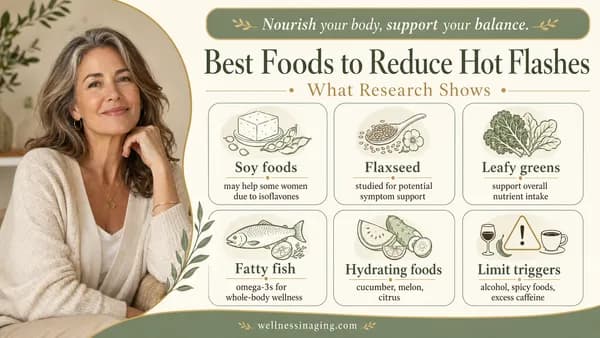
Best Foods to Reduce Hot Flashes: What Research Shows
Discover evidence-based foods that reduce hot flashes, including soy isoflavone dosages, omega-3 benefits, and which trigger foods to avoid for relief.
Read article →
Probiotics and Menopause: The Gut-Hormone Connection (What the Science Says)
Your gut bacteria directly regulate estrogen metabolism through the estrobolome. Here's what probiotics can and can't do for menopause — with strain-specific evidence for bone health, mood, and vaginal health.
Read article →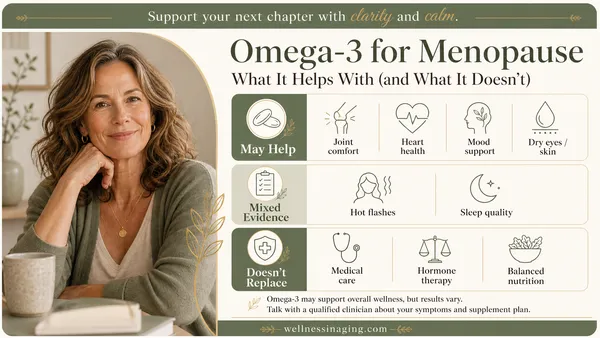
Omega-3 for Menopause: What It Helps With (and What It Doesn't)
Omega-3s have strong evidence for mood, joint pain, and heart health during menopause — but NOT for hot flashes. Here's the RCT data, the correct EPA vs DHA dose by symptom, and how to avoid rancid fish oil.
Read article →