
You know the drill: you're mid-conversation, mid-meeting, mid-sleep — and suddenly your face flushes, your heart races, and sweat beads on your forehead. Hot flashes affect 75-80% of menopausal women, and for many, they persist for an average of 7.4 years after the final menstrual period. That's far longer than the "two to three years" many women are told to expect.
Here's what most articles about hot flashes and diet fail to mention: your gut bacteria determine whether dietary changes will work for you. Whether you produce a compound called equol — something only 30-50% of Western women can do — largely determines if soy foods will cut your hot flash frequency in half or barely make a dent.
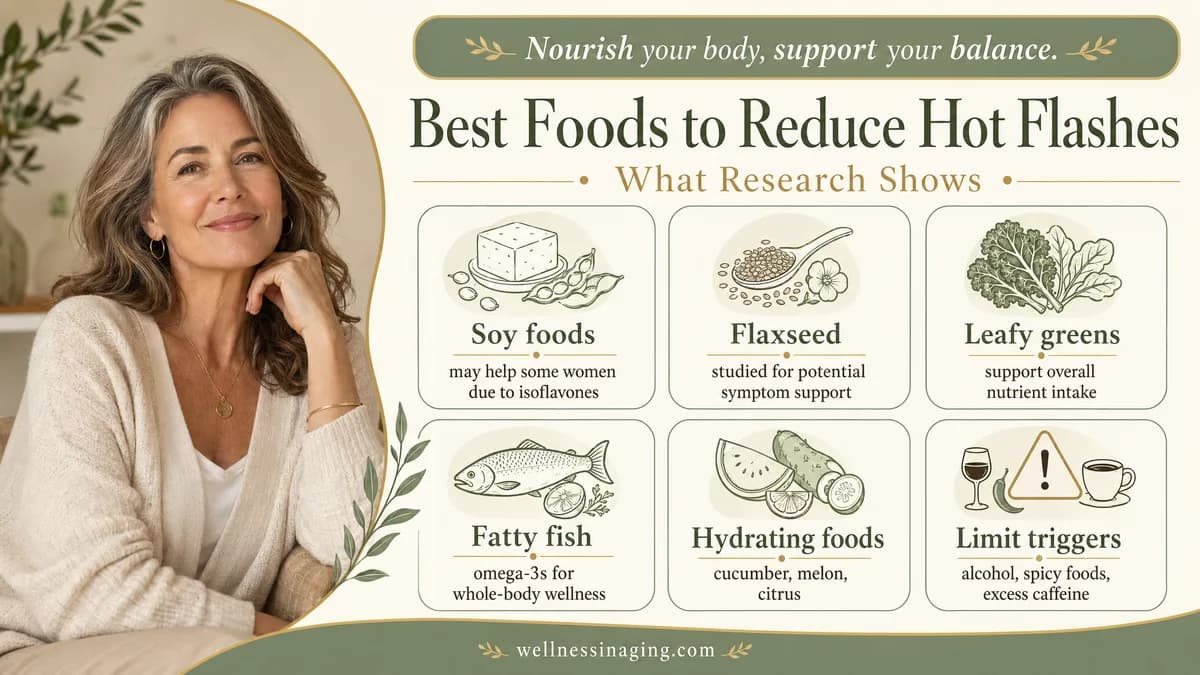
The best foods to reduce hot flashes include soy products providing 40-80mg isoflavones daily, ground flaxseed rich in lignans, and fatty fish with omega-3s that reduce inflammatory triggers. You'll find specific portions with isoflavone counts, the biological mechanism connecting estrogen loss to your body's haywire thermostat, and honest limitations. I'll also cover which popular remedies have weak evidence (evening primrose oil, dong quai) and realistic timelines — because dietary changes take 8-12 weeks, not days.
Free Guide: Your Complete Menopause Starter Guide Get evidence-based strategies for managing every major menopause symptom — including a food shopping list specifically for hot flash reduction. Download free →
Why Your Body's Thermostat Malfunctions After Menopause
To understand why certain foods help, you need to understand what's actually happening in your brain when a hot flash strikes.
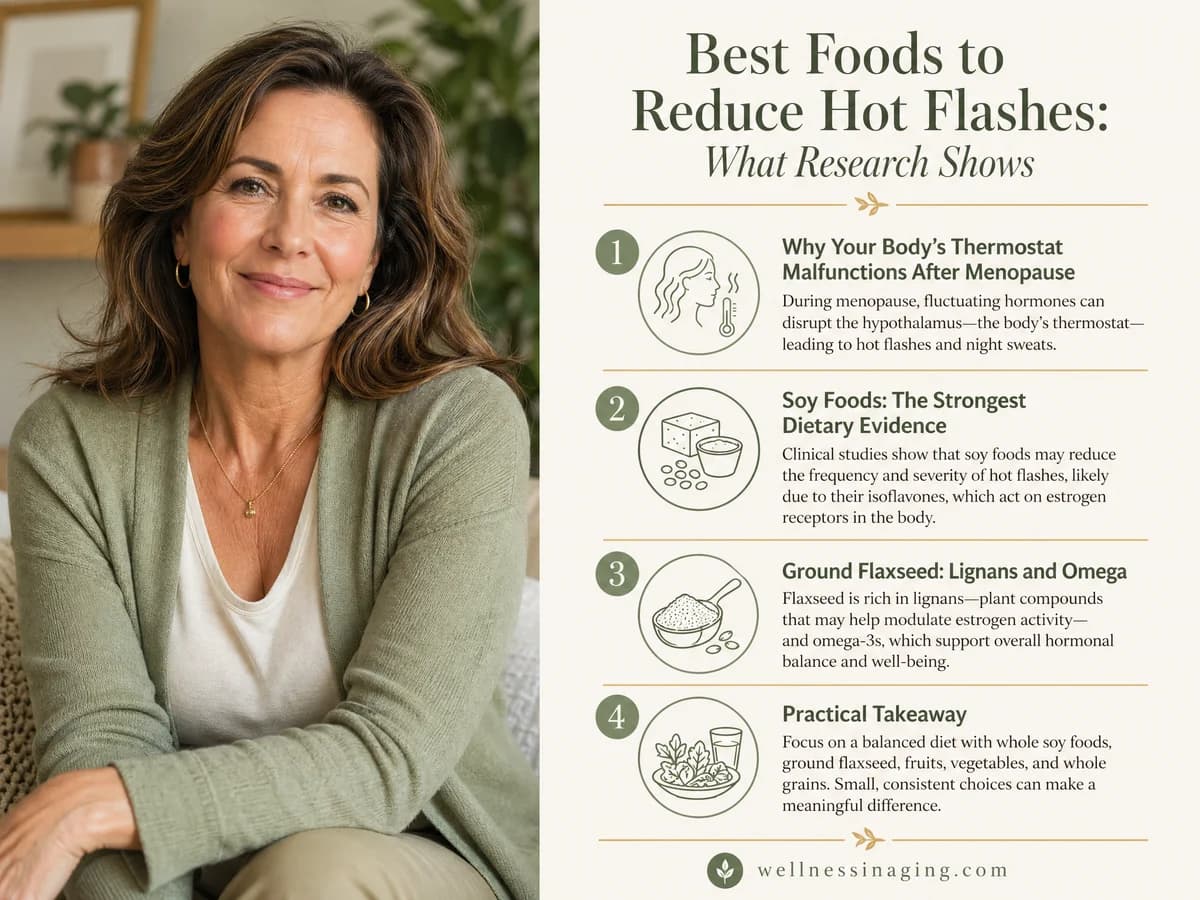
Your hypothalamus — the brain's temperature control center — maintains a "thermoneutral zone," a comfortable range where your body doesn't need to heat up or cool down. In premenopausal women, this zone spans about 0.4 degrees Celsius. Small temperature fluctuations? Your body handles them without triggering sweating or shivering.
Estrogen declines during menopause, and this zone narrows to almost zero. Even a tiny increase in core temperature — from a warm room, a hot drink, or normal metabolic activity — triggers a full heat-dissipation response: blood vessels dilate, skin temperature spikes 1-7 degrees Celsius, and you sweat. That's a hot flash.
The culprit: KNDy neurons (pronounced "candy") in the hypothalamus. These neurons regulate both reproductive hormones and body temperature. When estrogen drops, a signaling molecule called neurokinin B becomes overactive, triggering inappropriate heat-dissipation responses. The new medication fezolinetant blocks neurokinin B receptors and reduces hot flashes by 59-63% — it targets this exact pathway.
How food fits in: Phytoestrogens from soy and flax provide weak estrogenic activity (1/100 to 1/1000 the potency of human estradiol) that may partially stabilize these neurons. Anti-inflammatory compounds reduce systemic inflammation that further narrows the thermoneutral zone. Avoiding trigger foods prevents direct stimulation of heat-dissipation pathways.
Soy Foods: The Strongest Dietary Evidence — With a Critical Caveat
Soy foods have more clinical trial evidence than any other dietary approach for hot flashes. A 2012 meta-analysis of 17 randomized controlled trials found that soy isoflavone intake of 50mg daily reduced hot flash frequency by 20-50% and severity by 26% (Taku et al., Menopause).
Specific portions with isoflavone counts:
| Food | Serving Size | Isoflavones |
|---|---|---|
| Edamame (cooked) | 1 cup | 47mg |
| Tempeh | 3 oz | 35mg |
| Tofu (firm) | 3 oz | 20-35mg |
| Soy milk (unsweetened) | 1 cup | 20-30mg |
| Miso paste | 2 tbsp | 12-20mg |
| Cooked soybeans | 1/2 cup | 30-40mg |
Target intake: 40-80mg isoflavones daily from 1-2 servings of whole soy foods. This matches the dosing used in clinical trials showing benefit.
The equol factor — why soy works for some women but not others:
Here's what competitors never explain: the real active compound isn't the isoflavones themselves but equol, a metabolite produced when gut bacteria convert the isoflavone daidzein. Equol is 100 times more potent than its precursor.
The problem: only 30-50% of Western women have the gut bacteria that produce equol. If you're an equol producer, soy may reduce your hot flashes by 40-60%. If you're not, you may see only 10-25% reduction — or no benefit at all.
You can't easily test equol production status (though some companies offer it), but you can support equol-producing bacteria by eating fermented soy foods like tempeh and miso, maintaining good gut health through fiber intake, and avoiding unnecessary antibiotics.
Timeline: Soy requires 8-12 weeks of consistent daily intake to reach full effect. Too many women abandon it after two weeks without results — far too soon.
Safety: Decades of use in Asian populations (50-100mg isoflavones daily) show no hormonal disruption. Meta-analyses actually show 20-30% reduced breast cancer recurrence risk in soy consumers — it's protective, not harmful. (Evidence: Strong)
Ground Flaxseed: Lignans and Omega-3 in One Package
Flaxseeds contain lignans, a different class of phytoestrogens than soy isoflavones, plus omega-3 ALA and fiber.
Clinical evidence: A 2012 pilot study found 40g daily (about 3 tablespoons) of ground flaxseed reduced hot flash frequency by 50% over six weeks (Pruthi et al., Journal of the Society for Integrative Oncology). A 2002 study showed 57% reduction after three months (Lemay et al., Obstetrics & Gynecology). Smaller doses (1-2 tablespoons) show more modest 20-30% reductions.
Critical detail: Whole flaxseeds pass through your digestive system undigested. They look the same going out as they did going in. You must grind them — either buy pre-ground or use a coffee grinder. Store in the fridge because omega-3 oils oxidize quickly.
How to use:
- Add 1-2 tablespoons ground flaxseed to smoothies, oatmeal, or yogurt
- Mix into salad dressings or baked goods
- Use within 90 days of grinding for maximum benefit
Additional benefits: Cardiovascular protection from omega-3 and lignans, digestive regularity from fiber, and potential breast cancer protection.
(Evidence: Moderate-Strong — several small RCTs show benefit; larger trials needed)
Fatty Fish and Omega-3s: The Inflammation Connection
Women with frequent hot flashes (six or more daily) have significantly higher inflammatory markers — C-reactive protein averaging 2.8 mg/L versus 1.6 mg/L in women without symptoms (Thurston et al., Menopause, 2011). This inflammation affects hypothalamic temperature regulation.
EPA and DHA from fatty fish reduce inflammatory cytokines like IL-6 and TNF-alpha that contribute to hot flash severity.
Clinical evidence: A 12-week randomized trial found that EPA supplementation at 1.8g daily reduced hot flash frequency by 1.58 episodes per day compared to placebo (Lucas et al., Menopause, 2009). The SWAN study found women eating fish twice weekly or more had 25% fewer vasomotor symptoms.
Best sources with omega-3 content (EPA+DHA per 3.5 oz serving):
- Mackerel: 2.6g
- Salmon (wild-caught): 2.2g
- Herring: 2.0g
- Sardines: 1.5g
- Anchovies: 1.4g
Target intake: Two to three servings of fatty fish weekly provides roughly 1,000-1,500mg EPA+DHA averaged daily — enough for anti-inflammatory benefit though below the therapeutic dose used in the hot flash trial.
If you don't eat fish, an omega-3 supplement providing 1,000-2,000mg combined EPA+DHA daily offers similar benefit. Look for triglyceride form over ethyl ester for better absorption.
(Evidence: Moderate-Strong for supplementation; observational for food sources)
Ready to Take Action? Our free Menopause Starter Guide includes a complete hot flash food plan — what to eat, what to avoid, and a weekly meal planning template. Download your free guide →
Foods That Trigger Hot Flashes — And Why
Knowing what to add matters less if you're simultaneously consuming foods that trigger hot flashes. Here's what the research shows:
Alcohol — The Strongest Trigger
Alcohol causes direct vasodilation (blood vessel expansion), the same mechanism as a hot flash. It also produces acetaldehyde, a metabolite that activates the sympathetic nervous system, disrupts sleep architecture (worsening night sweats), and affects estrogen metabolism.
Evidence: Women drinking two or more alcoholic beverages daily have 80% higher risk of moderate-to-severe hot flashes (Freeman et al., Menopause, 2005). Even moderate intake (one drink daily) shows 20-40% increased frequency in some studies. Red wine is often reported as the worst trigger — possibly due to histamines, sulfites, and tannins. Yes, even that nightly glass of Pinot Noir.
Practical approach: If hot flashes are severe, eliminate alcohol entirely. Otherwise, limit to three or four drinks per week maximum, avoid drinking close to bedtime, and choose clear spirits over wine or beer if you do drink. (Evidence: Strong)
Sugar and Refined Carbohydrates
Rapid blood sugar spikes trigger insulin surges that cause vasodilation and activate inflammatory cascades. Women in the highest quartile of glycemic load have 2.9 times higher C-reactive protein levels (Liu et al., American Journal of Clinical Nutrition, 2002).
Evidence: Each daily serving of sugar-sweetened beverages is associated with 25% increased hot flash severity (Kroenke et al., 2013). High intake of processed foods and added sugars correlates with 50% higher odds of moderate-to-severe vasomotor symptoms. That morning donut and afternoon soda? They're not helping.
Worst offenders: Soda, sweet tea, fruit juice (even 100%), candy, pastries, white bread, sweetened cereals.
Better alternatives: Whole grains (quinoa, brown rice, steel-cut oats), sweet potatoes, legumes, berries with their natural fiber. Pair carbohydrates with protein or fat to slow absorption. (Evidence: Strong)
Spicy Foods
Capsaicin in chili peppers activates TRPV1 heat receptors, directly triggering the same vasodilation and sweating response as a hot flash.
Practical approach: Avoid hot peppers, cayenne, and hot sauces during active hot flash phases. Milder spices like cumin, coriander, and turmeric are generally tolerated. Individual variation exists — some women handle mild heat without problems. (Evidence: Moderate)
Caffeine — Highly Individual
Caffeine stimulates the sympathetic nervous system and may affect hypothalamic temperature regulation.
Evidence: Mixed. Some studies show 20-30% worsening; large cohort studies show no significant association (Politi et al., 2006). Plenty of women report clear trigger effects despite population-level data showing weak association.
Practical approach: Test your tolerance. Eliminate caffeine for two weeks, then reintroduce slowly. If you drink coffee, limit to one or two cups before 2 PM (sleep disruption worsens night sweats). Green tea offers lower caffeine with anti-inflammatory polyphenols. (Evidence: Mixed — high individual variation)
Hot Temperature Foods and Beverages
Hot foods directly raise core body temperature. In women with a near-zero thermoneutral zone, this can immediately trigger a hot flash.
Practical approach: Let hot foods and beverages cool to warm before consuming. Choose iced or room-temperature beverages when possible. (Evidence: Moderate)
What Does NOT Work: Overhyped Remedies with Weak Evidence
Being honest about what lacks evidence builds trust — and saves you money.
Evening Primrose Oil (Evidence: Weak / Not Recommended)
Marketed for hot flashes due to gamma-linolenic acid content, multiple randomized controlled trials show no significant benefit over placebo. A 2013 Cochrane review concluded: "No evidence to support use." May cause mild nausea or headache.
Save your money.
Dong Quai (Evidence: Weak)
This traditional Chinese medicine herb is culturally significant but lacks evidence for hot flashes specifically. A 1997 randomized trial (Hirata et al.) found no benefit over placebo. May interact with blood thinners. Limited high-quality research exists.
Red Clover Isoflavones (Evidence: Mixed / Insufficient)
Contains different isoflavones than soy (formononetin, biochanin A) with inconsistent results across studies. Meta-analyses show weak effect at best — 10-15% reduction. Not harmful, but soy has far stronger evidence. If you're choosing phytoestrogens, prioritize soy.
High-Dose Vitamin E Supplements (Evidence: Weak, Safety Concerns)
Studies show modest benefit at 400-800 IU daily (about 20% reduction). However, high-dose vitamin E (over 400 IU) may increase bleeding risk and all-cause mortality. Get vitamin E from food sources like nuts, seeds, and olive oil. Avoid high-dose supplements.
Realistic Expectations: Diet Versus Medical Treatment
Here's what competitors often obscure: dietary changes produce more modest results than medication.
Comparative efficacy:
| Approach | Hot Flash Reduction | Timeline |
|---|---|---|
| Hormone replacement therapy (HRT) | 75-90% | 2-4 weeks |
| Fezolinetant (new non-hormonal Rx) | 59-63% | 4-12 weeks |
| SSRIs (off-label) | 40-60% | 2-4 weeks |
| Soy isoflavones (dietary) | 20-50% | 8-12 weeks |
| Combined dietary approach | 30-60% (adherent) | 8-12 weeks |
When diet is likely sufficient:
- Mild hot flashes (fewer than seven daily) that do not significantly disrupt quality of life
- Women who cannot or choose not to take HRT
- As maintenance after discontinuing HRT
- Combined with other non-hormonal strategies like paced breathing or cognitive behavioral therapy
When diet isn't enough:
- Severe hot flashes (more than 14 daily) disrupting sleep, work, or quality of life
- Moderate-to-severe symptoms persisting after 12 weeks of adherent dietary changes
- Action: Consult your healthcare provider about HRT, fezolinetant, or SSRIs. Diet remains valuable as adjunct therapy.
Practical Meal Ideas: Reaching Your Isoflavone Target
Knowing foods are beneficial means nothing without practical application. Here are meal combinations that hit the 40-80mg daily isoflavone target:
Breakfast Options:
Soy-Powered Smoothie (30mg isoflavones): Blend 1 cup unsweetened soy milk with 1 cup frozen berries, 1 tablespoon ground flaxseed, half a banana, and a handful of spinach. Drink at cool or room temperature to avoid triggering hot flashes.
Tofu Scramble (20-25mg isoflavones): Crumble 4 oz firm tofu with sauteed spinach, tomatoes, and mushrooms. Season with turmeric (anti-inflammatory). Serve with whole grain toast and avocado.
Lunch Options:
Tempeh Buddha Bowl (45mg isoflavones): Marinated and baked tempeh (3 oz) over brown rice with steamed bok choy, snap peas, and shredded cabbage. Use miso-ginger dressing for additional isoflavones. Top with sesame seeds.
Salmon Power Salad (23mg isoflavones): Grilled wild salmon over mixed greens with 1/2 cup edamame, cherry tomatoes, cucumber, and olive oil-lemon dressing.
Dinner Options:
Baked Cod with Roasted Vegetables: Cod or halibut with roasted Brussels sprouts, sweet potato, and bell peppers. Cruciferous vegetables support healthy estrogen metabolism. Keep portions moderate to avoid postprandial thermogenesis triggering hot flashes.
Salmon with Miso Glaze (10-15mg isoflavones): Wild salmon with miso glaze, steamed asparagus, and baby bok choy. Combines omega-3 anti-inflammatory benefit with isoflavones.
Snacks:
- Edamame (1 cup = 47mg isoflavones) — eat at room temperature with light salt
- Cucumber slices with hummus — hydrating with some phytoestrogens from chickpeas
- Dark chocolate (70%+) — 1-2 squares for magnesium and polyphenols
- Frozen grapes — cooling and naturally sweet
Free Download: Menopause Starter Guide A practical guide covering symptoms, treatment options, and evidence-based lifestyle changes — including a shopping list for hot flash-reducing foods. Download free →
Who This Is For — And Who Should See a Doctor First
Good candidates for dietary management:
- Women with mild-to-moderate hot flashes seeking natural approaches
- Those who cannot take HRT due to medical history or personal preference
- Women willing to commit to 8-12 weeks of consistent dietary changes
- Anyone seeking adjunct support alongside medical treatment
See your doctor first if:
- Hot flashes started suddenly before age 40 (may indicate premature ovarian insufficiency)
- You have a history of hormone-sensitive breast cancer (HRT decisions require specialist guidance; soy is generally considered safe)
- Symptoms are worsening despite lifestyle changes
- Night sweats are severely disrupting sleep (may need short-term medical intervention while dietary changes take effect)
- You're experiencing hot flashes with other concerning symptoms like unexplained weight loss or night sweats unrelated to menopause
The Bottom Line
Start with the two interventions that have the strongest evidence: add two servings of soy foods daily (targeting 40-80mg isoflavones) and eliminate alcohol entirely for at least four weeks. Track your hot flash frequency using a simple notes app or journal. If you see 30% or greater improvement after 12 weeks, dietary management may be sufficient for you. If improvement's minimal or you started with severe symptoms, bring this data to your healthcare provider and discuss adding fezolinetant or another medical option — with diet continuing as support.
The best foods to reduce hot flashes work through multiple pathways — phytoestrogens provide weak estrogenic activity, omega-3s reduce inflammation that narrows your thermoneutral zone, and eliminating triggers prevents direct stimulation of heat-dissipation responses. For a complete dietary approach that addresses inflammation systemically, see our anti-inflammatory diet for menopause guide. If you're also tracking protein intake to preserve muscle mass during menopause, read protein needs after 50.
For more on the sleep disruption side of this equation, read our guide to managing night sweats during menopause. If you are considering supplements alongside dietary changes, see magnesium for menopause — magnesium supports both hot flash reduction and sleep quality.
References
-
Taku, K., Melby, M. K., Kronenberg, F., Kurzer, M. S., & Messina, M. (2012). Extracted or synthesized soybean isoflavones reduce menopausal hot flash frequency and severity: systematic review and meta-analysis of randomized controlled trials. Menopause, 19(7), 776-790.
-
Freeman, E. W., Sammel, M. D., Lin, H., Gracia, C. R., Kapoor, S., & Ferdousi, T. (2005). The role of anxiety and hormonal changes in menopausal hot flashes. Menopause, 12(3), 258-266.
-
Lucas, M., Asselin, G., Merette, C., Poulin, M. J., & Dodin, S. (2009). Effects of ethyl-eicosapentaenoic acid omega-3 fatty acid supplementation on hot flashes and quality of life among middle-aged women. Menopause, 16(2), 357-366.
-
Pruthi, S., Thompson, S. L., Novotny, P. J., et al. (2012). Pilot evaluation of flaxseed for the management of hot flashes. Journal of the Society for Integrative Oncology, 10(3), 156-162.
-
Kroenke, C. H., Caan, B. J., Stefanick, M. L., et al. (2012). Effects of a dietary intervention and weight change on vasomotor symptoms in the Women's Health Initiative. Menopause, 19(9), 980-988.
-
Freedman, R. R. (2014). Menopausal hot flashes: mechanisms, endocrinology, treatment. Journal of Steroid Biochemistry and Molecular Biology, 142, 115-120.
-
Thurston, R. C., Christie, I. C., & Matthews, K. A. (2011). Hot flashes and cardiac vagal control: A link to cardiovascular risk? Menopause, 18(12), 1300-1305.
-
Rance, N. E., Dacks, P. A., Mittelman-Smith, M. A., Romanovsky, A. A., & Krajewski-Hall, S. J. (2015). Modulation of body temperature and LH secretion by hypothalamic KNDy neurons. Frontiers in Neuroendocrinology, 38, 51-60.
-
Lemay, A., Dodin, S., Kadri, N., Jacques, H., & Forest, J. C. (2002). Flaxseed dietary supplement versus hormone replacement therapy in hypercholesterolemic menopausal women. Obstetrics & Gynecology, 100(3), 495-504.
-
Liu, S., Manson, J. E., Buring, J. E., Stampfer, M. J., Willett, W. C., & Ridker, P. M. (2002). Relation between a diet with a high glycemic load and plasma concentrations of high-sensitivity C-reactive protein. American Journal of Clinical Nutrition, 75(3), 492-498.
This content is for informational purposes only and does not constitute medical advice. Always consult with a qualified healthcare provider before starting any new supplement or treatment. Individual results may vary.
Free Download
The Menopause Starter Guide
Evidence-rated strategies, a supplement reference, and a symptom tracker. 12 pages, free.
Frequently Asked Questions
Related Articles
Anti-Inflammatory Diet for Menopause: Evidence Guide
How an anti-inflammatory diet reduces hot flashes, joint pain, and brain fog during menopause. Evidence-rated foods, 4 dietary patterns compared, and a practical meal plan.
Read article →
Probiotics and Menopause: The Gut-Hormone Connection (What the Science Says)
Your gut bacteria directly regulate estrogen metabolism through the estrobolome. Here's what probiotics can and can't do for menopause — with strain-specific evidence for bone health, mood, and vaginal health.
Read article →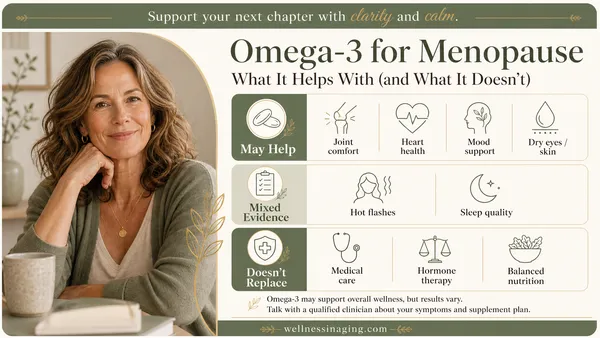
Omega-3 for Menopause: What It Helps With (and What It Doesn't)
Omega-3s have strong evidence for mood, joint pain, and heart health during menopause — but NOT for hot flashes. Here's the RCT data, the correct EPA vs DHA dose by symptom, and how to avoid rancid fish oil.
Read article →