
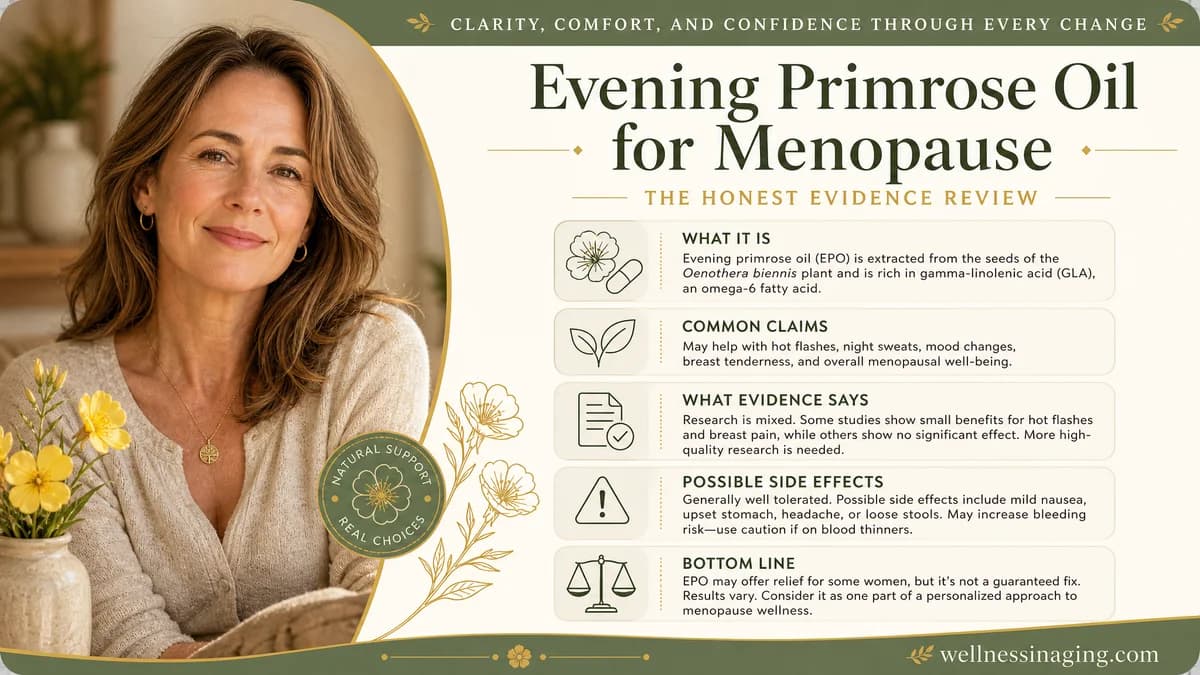
Your naturopath recommended it. Your friend swears by it. The supplement aisle has a dozen brands promising relief from hot flashes and night sweats. But here is what the clinical research actually shows: evening primrose oil does not reduce hot flashes or night sweats in menopausal women.
Two well-designed randomized controlled trials tested this directly. Both found no difference between evening primrose oil and placebo. Zero benefit. The women taking sugar pills did just as well as the women taking EPO capsules.
This article will explain what evening primrose oil is, why the theory behind it sounded promising, what the clinical trials found, where EPO does have evidence (hint: it is not menopause), and what you should consider instead if hot flashes are disrupting your life.
What Evening Primrose Oil Actually Is
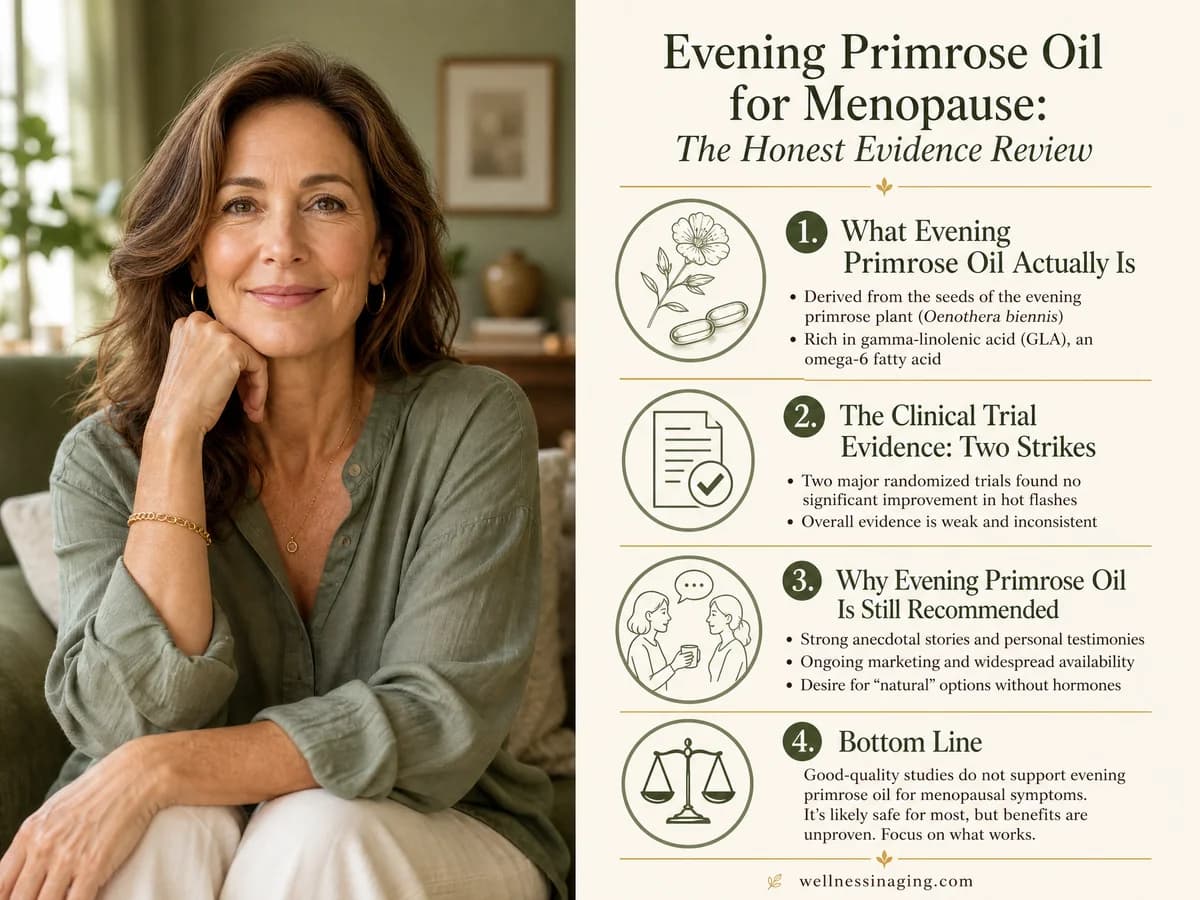
Evening primrose oil comes from the seeds of Oenothera biennis, a wildflower native to North America. The oil has been used for various women's health conditions since the 1980s, when it became popular as a "natural hormone balancer."
The active component everyone talks about is gamma-linolenic acid (GLA), an omega-6 fatty acid. A typical 1000mg evening primrose oil capsule contains about 80-100mg of GLA.
Here is why researchers thought EPO might help with menopause:
- Your body converts GLA into a substance called DGLA (dihomo-gamma-linolenic acid)
- DGLA produces prostaglandin E1, an anti-inflammatory compound
- These prostaglandins were theorized to help regulate body temperature and reduce hot flash frequency
The theory made biological sense. The enzyme that converts dietary fats into GLA (delta-6-desaturase) becomes less efficient as we age. Supplementing with GLA directly seemed like a reasonable workaround.
But here is the problem: theories need to be tested. When researchers actually tested evening primrose oil against placebo in menopausal women, the theory fell apart.
The Clinical Trial Evidence: Two Strikes
The Chenoy Study (1994)
The first major study was published in the BMJ (British Medical Journal), one of the world's most respected medical journals.
Study design: Randomized, double-blind, placebo-controlled crossover trial
Participants: 56 women experiencing menopausal hot flashes
Intervention: 4000mg evening primrose oil per day (providing approximately 320mg GLA) versus placebo, with each woman taking both treatments for 6 months each
What they measured: Hot flash frequency, intensity, and quality of life using daily diaries
Results: No significant difference between evening primrose oil and placebo. Hot flash frequency, intensity, and overall quality of life scores were virtually identical in both groups.
The researchers concluded: "Gamolenic acid offers no benefit over placebo for the treatment of menopausal flushing."
Evidence strength: STRONG NEGATIVE
The Farzaneh Study (2013)
Nearly two decades later, another research team in Iran tested evening primrose oil again.
Study design: Randomized controlled trial, parallel-group
Participants: 56 postmenopausal women
Intervention: 500mg evening primrose oil per day versus placebo for 6 weeks
What they measured: Hot flash frequency and severity
Results: Both groups improved — but evening primrose oil was not superior to placebo. The women taking placebo pills experienced the same reduction in hot flashes as those taking EPO.
Evidence strength: STRONG NEGATIVE
What This Means
When two well-designed studies testing a supplement both show no benefit over placebo, that is strong negative evidence. It does not mean "we need more research." It means the intervention was tested and failed.
This is particularly important because the Chenoy study used a high dose (4000mg/day) for a long duration (6 months). If evening primrose oil worked for hot flashes at any dose or timeline, this study should have detected it.
Why Evening Primrose Oil Is Still Recommended
If the evidence is this clear, why do naturopaths, health food store employees, and even some healthcare providers still recommend EPO for menopause?
Historical momentum. EPO became popular in the 1980s and 1990s before rigorous trials were conducted. Recommendations from that era persist in books, websites, and practitioner training materials that have not been updated.
The placebo effect is real. In menopause trials, placebo groups often show 20-40% improvement in symptoms. Women taking any pill — even a sugar pill — sometimes feel better. This leads to genuine testimonials from women who took EPO and improved, even though the improvement was not due to the EPO itself.
Symptoms naturally fluctuate. Hot flashes wax and wane over time. If you start a supplement during a bad week and experience a natural improvement, you might attribute that improvement to the supplement.
Confusion with breast pain evidence. EPO does have moderate evidence for cyclical breast pain (mastalgia) in premenopausal women — a PMS symptom, not a menopause symptom. This positive finding sometimes gets incorrectly generalized to "EPO helps with women's health issues."
Commercial incentives. Evening primrose oil is a profitable supplement. Manufacturers have little reason to publicize negative trial results.
We wish EPO worked. Natural solutions are appealing, especially for women who cannot or prefer not to use hormone therapy. But wishing something worked does not make it effective.
Where Evening Primrose Oil Does Have Evidence
To be fair to EPO, there is one area where it shows genuine benefit — it is just not menopause.
Cyclical Breast Pain (Mastalgia)
Evidence strength: MODERATE POSITIVE
A 2010 study published in Alternative Medicine Review tested EPO in 120 women with cyclical breast pain — the tender, swollen breast tissue that many women experience in the days before their period.
Women taking 2000mg of evening primrose oil daily for 6 months experienced significantly less breast pain compared to those taking placebo. The effect size was modest but clinically meaningful.
Why this matters for menopause: Some perimenopausal women experience breast tenderness from fluctuating hormones. EPO might help with this specific symptom during perimenopause. However, once you are postmenopausal and hormone levels stabilize, cyclical breast pain typically resolves on its own.
The key distinction: Breast pain relief is a PMS benefit, not a menopause benefit. If you are buying EPO for hot flashes or night sweats, you are spending money on something that will not help.
Other Claims: What the Evidence (Does Not) Say
You may have seen evening primrose oil marketed for other menopause-related concerns. Here is the honest assessment:
Vaginal Dryness
Evidence strength: INSUFFICIENT
No clinical trials have tested EPO for vaginal dryness. There is no plausible mechanism by which an oral omega-6 supplement would specifically improve vaginal tissue. Skip it.
Mood and Anxiety
Evidence strength: INSUFFICIENT
While GLA theoretically influences prostaglandin synthesis which could affect neurotransmitters, no quality studies have tested EPO for menopausal mood symptoms. Small, older studies on PMS-related mood showed mixed results, and those findings do not transfer to menopause.
Skin Health
Evidence strength: WEAK
EPO has some evidence for inflammatory skin conditions like eczema, but this involves different mechanisms than menopause-related skin changes. No trials have tested EPO for menopause-related skin dryness or aging.
Bone Health
Evidence strength: INSUFFICIENT
One study combined GLA with omega-3 fatty acids (fish oil) and found some improvement in calcium absorption and bone turnover markers. But this was a combination intervention — you cannot isolate the EPO effect. And bone mineral density did not significantly improve.
Weight Management
Evidence strength: NO EVIDENCE
There is no evidence and no plausible mechanism for EPO to help with menopause-related weight changes.
Safety and Drug Interactions
Evening primrose oil is generally safe for most people, but there are important exceptions.
Who Should Avoid EPO
People with epilepsy or seizure disorders: Case reports have documented EPO lowering the seizure threshold. A 1999 case report in Annals of Internal Medicine described seizures in a patient taking EPO with a phenothiazine medication. If you have any history of seizures, avoid EPO.
People taking phenothiazine medications: These antipsychotic drugs (chlorpromazine, prochlorperazine, fluphenazine) may interact with EPO to increase seizure risk. Do not combine them.
People on blood thinners: EPO theoretically affects platelet aggregation through its prostaglandin effects. While no serious bleeding events have been documented from EPO alone, use caution if you take warfarin, heparin, aspirin, clopidogrel (Plavix), or regular NSAIDs. Monitor your INR if on warfarin.
People scheduled for surgery: Discontinue EPO at least 2 weeks before any scheduled surgery due to theoretical bleeding risk.
Pregnant women: EPO may increase risk of complications including premature rupture of membranes. Despite historical use to "prepare for labor," modern evidence suggests risk. Avoid it.
Common Side Effects
Most side effects are mild and gastrointestinal:
- Nausea and stomach discomfort (5-10% of users)
- Bloating or diarrhea
- Soft stools, especially at doses above 3000mg/day
- Rare headaches
Taking EPO with food typically reduces GI side effects.
Better Alternatives for Hot Flashes
If you are spending $15-30 per month on evening primrose oil for hot flashes, consider redirecting that money toward options with actual evidence.
| Option | Hot Flash Reduction | Evidence Strength | Monthly Cost | Notes |
|---|---|---|---|---|
| HRT (hormone therapy) | 75-90% | STRONG | $10-150 | Most effective; discuss risks with doctor |
| Black cohosh | 20-30% | MODERATE | $10-25 | Best natural option; 4-8 weeks to see effect |
| Soy isoflavones | 20-50% | MODERATE | $15-25 | From food or supplements |
| Paced breathing | 40-50% intensity reduction | STRONG | Free | Slow, deep breathing during hot flashes |
| Evening primrose oil | 0% | STRONG NEGATIVE | $15-30 | Does not work for hot flashes |
What About Omega-3s vs. Omega-6s?
Evening primrose oil is an omega-6 fatty acid (GLA). Fish oil is omega-3 (EPA/DHA). They are not interchangeable.
Omega-3s have moderate to strong evidence for mood support, inflammation, and cardiovascular health. Omega-3s show modest (weak) evidence for reducing hot flash frequency — perhaps 1-2 fewer per day.
If you are going to spend money on a fatty acid supplement, omega-3 fish oil offers broader health benefits than omega-6 evening primrose oil. See our guide to the best menopause supplements for more evidence-based options.
The Bottom Line
Evening primrose oil is one of the most oversold supplements for menopause. The theory was reasonable — GLA produces anti-inflammatory prostaglandins that might regulate body temperature. But when researchers actually tested this in clinical trials, EPO performed no better than placebo for hot flashes.
If your practitioner recommended EPO for menopause, they may be relying on outdated information. If a friend swears it worked for them, they likely experienced the placebo effect or natural symptom improvement.
Your money is better spent elsewhere. For hot flashes with evidence-based support, consider black cohosh (moderate evidence, 20-30% reduction), soy isoflavones (moderate evidence, 20-50% reduction), or talk to your doctor about hormone therapy (strong evidence, 75-90% reduction).
One exception: if you are in perimenopause and experiencing cyclical breast pain, EPO at 2000-3000mg daily does have moderate evidence for that specific symptom. Just do not expect it to help with hot flashes.
Download the Menopause Starter Guide →
References
-
Chenoy R, Hussain S, Tayob Y, O'Brien PM, Moss MY, Morse PF. Effect of oral gamolenic acid from evening primrose oil on menopausal flushing. BMJ. 1994;308(6927):501-503.
-
Farzaneh F, Fatehi S, Sohrabi MR, Alizadeh K. The effect of oral evening primrose oil on menopausal hot flashes: a randomized clinical trial. Archives of Gynecology and Obstetrics. 2013;288(5):1075-1079.
-
Pruthi S, Wahner-Roedler DL, Torkelson CJ, et al. Vitamin E and evening primrose oil for management of cyclical mastalgia: a randomized pilot study. Alternative Medicine Review. 2010;15(1):59-67.
-
Bayles B, Usatine R. Evening primrose oil. American Family Physician. 2009;80(12):1405-1408.
-
Belch JJ, Hill A. Evening primrose oil and borage oil in rheumatologic conditions. American Journal of Clinical Nutrition. 2000;71(1 Suppl):352S-356S.
-
Donovan JL, DeVane CL, Chavin KD, Oates JC, Njoku C, Patrick KS. Possible interactions between dietary supplements and prescription medications. American Family Physician. 1999;59(5):1239-1245.
This content is for informational purposes only and does not constitute medical advice. Always consult with a qualified healthcare provider before starting any new supplement or treatment, especially if you have epilepsy, take blood thinners, or are on medications. Individual results may vary.
Free Download
The Menopause Starter Guide
Evidence-rated strategies, a supplement reference, and a symptom tracker. 12 pages, free.
Frequently Asked Questions
Related Articles
Probiotics and Menopause: The Gut-Hormone Connection (What the Science Says)
Your gut bacteria directly regulate estrogen metabolism through the estrobolome. Here's what probiotics can and can't do for menopause — with strain-specific evidence for bone health, mood, and vaginal health.
Read article →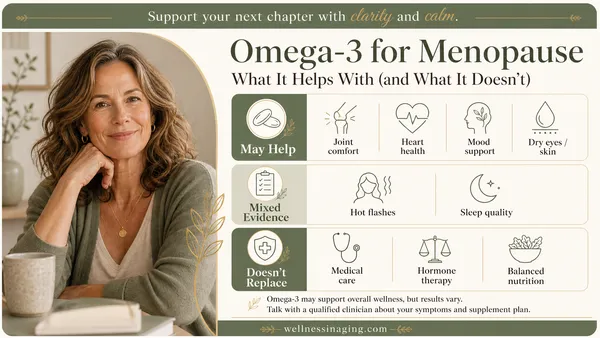
Omega-3 for Menopause: What It Helps With (and What It Doesn't)
Omega-3s have strong evidence for mood, joint pain, and heart health during menopause — but NOT for hot flashes. Here's the RCT data, the correct EPA vs DHA dose by symptom, and how to avoid rancid fish oil.
Read article →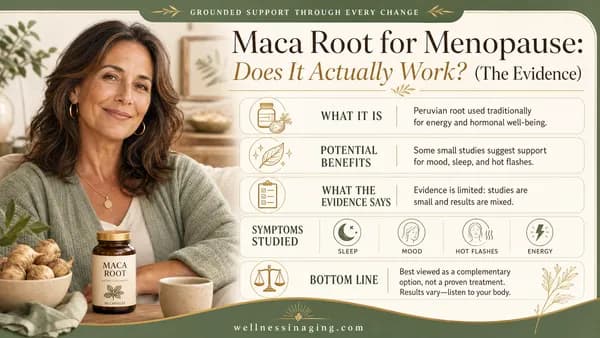
Maca Root for Menopause: Does It Actually Work? (The Evidence)
Maca root is widely promoted for menopause. Here's what the RCTs actually show — what it helps with (libido, mood), what it doesn't (hot flashes), and the correct dose.
Read article →