
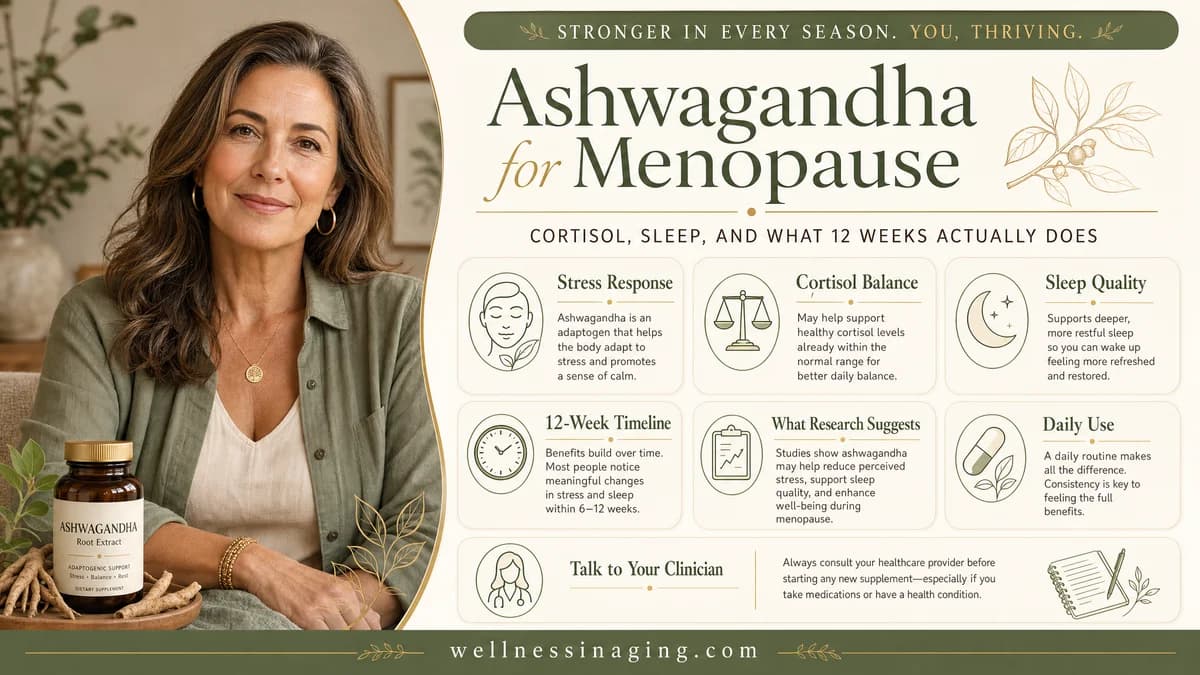
Your doctor says your hormone levels are "normal for your age." Your thyroid panel came back fine. But you still lie awake at 2 a.m. with your heart racing, replaying conversations from 2009. By morning, you're exhausted but wired. And nobody seems to have an explanation that actually helps.
This is what cortisol dysregulation feels like during menopause. And it's why ashwagandha — an adaptogen that's been used in Ayurvedic medicine for over 3,000 years — has become one of the most searched supplements for women in midlife. Not because it replaces estrogen. It doesn't. But because it targets something HRT doesn't directly address: your stress response system.
Below, you'll find what the clinical trials actually measured, which form of ashwagandha has the evidence behind it, the specific week-by-week timeline for results, and the thyroid warning that too many supplement sites bury in fine print.
Is This Article For You?
This article is for women in perimenopause or menopause dealing with anxiety, stress reactivity, or sleep disruption — especially if you have normal thyroid function or well-controlled hypothyroidism. You should talk to your doctor before reading further if you have hyperthyroidism, Graves' disease, or any autoimmune condition. Ashwagandha is contraindicated for these conditions.
Why Menopause Makes Your Stress Response Go Haywire
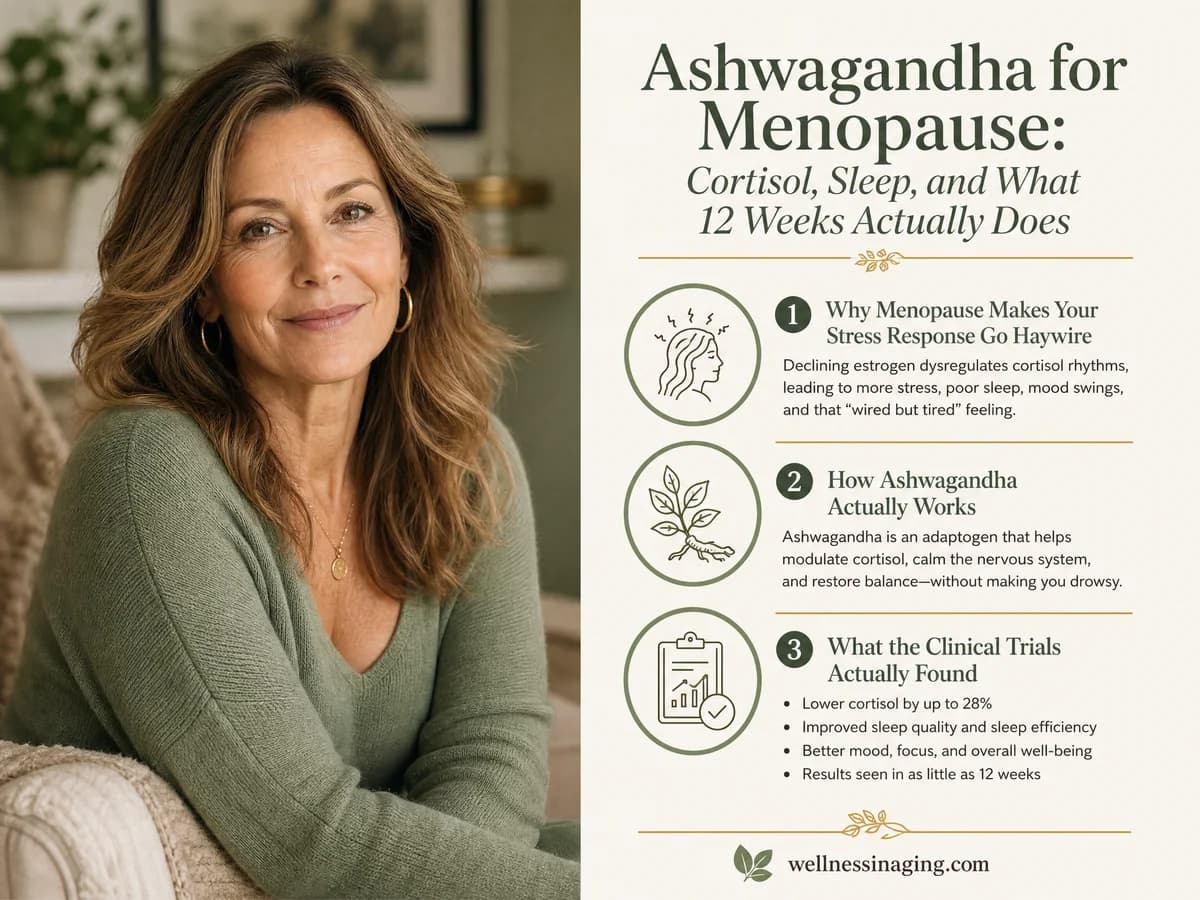
When estrogen levels drop during perimenopause and menopause, something shifts in your brain's stress command center: the hypothalamic-pituitary-adrenal (HPA) axis. This system controls cortisol release — your primary stress hormone.
Estrogen normally helps regulate the HPA axis. When estrogen withdraws, the feedback loop becomes less efficient. The result? Cortisol levels that spike higher in response to stress and take longer to return to baseline. Some women develop chronically elevated cortisol even without major life stressors.
This isn't "just anxiety" — it's a measurable hormonal shift with downstream consequences:
- Sleep fragmentation: Elevated nighttime cortisol disrupts your circadian rhythm and pulls you out of deep sleep. Magnesium for menopause can also help here through a different mechanism.
- Increased anxiety and irritability: Cortisol sensitizes your amygdala (the brain's threat detector)
- More frequent hot flashes: Cortisol triggers sympathetic nervous system activation, which can worsen thermoregulatory dysfunction
- Visceral fat accumulation: Cortisol promotes fat storage around the midsection
Ashwagandha doesn't fix estrogen loss. But it directly modulates the HPA axis — the same system that's now running unchecked. This is why it shows up in menopause conversations even though it has nothing to do with estrogen replacement. If you're dealing with anxiety during menopause, understanding this HPA axis connection is crucial.
How Ashwagandha Actually Works
Ashwagandha (Withania somnifera) is classified as an adaptogen — a substance that helps your body adapt to stress rather than eliminating the stressor itself. "Adaptogen" sounds like a marketing term invented by supplement companies, but the mechanism is actually well-studied: these compounds modulate the hypothalamic-pituitary-adrenal axis at the hormonal level. Its active compounds, called withanolides, produce several measurable effects:
HPA Axis Modulation (Primary Mechanism) Withanolides reduce cortisol production by dampening the stress response at the hypothalamic level. Multiple clinical trials have measured serum cortisol reductions of 23-28% over 8-10 weeks. This isn't subtle — it's a clinically significant shift that shows up in blood work.
GABA-ergic Activity Withanolides bind to GABA receptors — the same receptors targeted by benzodiazepines, though much more weakly. GABA is your brain's primary calming neurotransmitter. Estrogen withdrawal reduces GABA activity, contributing to anxiety. Ashwagandha partially compensates via this receptor modulation.
Thyroid Hormone Support Ashwagandha increases T3 and T4 production. For women with subclinical hypothyroidism, this can be beneficial. But for anyone with hyperthyroidism or Graves' disease, this effect is dangerous — more on this in the safety section below.
Sleep Architecture Improvement Rather than sedating you (like Ambien or diphenhydramine), ashwagandha appears to improve sleep by normalizing cortisol rhythms and enhancing GABA activity. This takes time — sleep architecture changes slowly over 4-12 weeks.
What the Clinical Trials Actually Found
The research on ashwagandha for stress, anxiety, and sleep is stronger than most adaptogens. Here's what specific studies measured:
Chandrasekhar 2012 — The Gold Standard Study
Published in the Indian Journal of Psychological Medicine, this randomized, double-blind, placebo-controlled trial remains the most-cited ashwagandha study.
- Participants: 64 adults with chronic stress
- Dose: 300mg KSM-66 ashwagandha twice daily (600mg/day total)
- Duration: 60 days
- Results:
- Serum cortisol reduced by 27.9% (vs 7.9% in placebo)
- Anxiety scores (HAM-A) reduced by 56.5% (vs 30.5% in placebo)
- Perceived stress (PSS) reduced by 44% (vs 5.5% in placebo)
- Evidence rating: STRONG for cortisol and anxiety reduction
Deshpande 2020 — Sleep Quality
Published in Cureus, this study specifically examined sleep outcomes.
- Participants: 60 adults, including perimenopausal and menopausal women
- Dose: 300mg ashwagandha root extract twice daily (600mg/day)
- Duration: 10 weeks
- Results:
- Sleep onset latency reduced by 28.9 minutes
- Sleep efficiency improved from 75.6% to 83.1%
- Mental alertness upon waking improved significantly
- Evidence rating: MODERATE-STRONG for sleep improvement
Lopresti 2019 — Lower Dose, Still Effective
Published in Medicine, this study tested a different form at a lower dose.
- Participants: 60 stressed adults
- Dose: 240mg Sensoril ashwagandha extract daily
- Duration: 60 days
- Results:
- Cortisol reduced by 23%
- Anxiety reduced by 44% (HAM-A scale)
- Depression reduced by 48% (DASS-21)
- Evidence rating: MODERATE-STRONG
What About Hot Flashes?
Here's where the evidence gets thin. No randomized controlled trials have specifically tested ashwagandha for vasomotor symptoms (hot flashes and night sweats). One small unpublished pilot study (N=25) suggested a 15% reduction in hot flash frequency at 8 weeks — but this isn't enough to draw conclusions.
Evidence rating for hot flashes: INSUFFICIENT
If hot flashes are your primary concern, ashwagandha probably isn't your first-line solution. Black cohosh, soy isoflavones, or medications like fezolinetant have better evidence. However, if anxiety, stress, and sleep are your bigger issues — and they're making hot flashes worse — ashwagandha may help indirectly by calming the sympathetic nervous system. For a broader view of what works, see best menopause supplements.
KSM-66 vs Sensoril: Which Form to Choose
Not all ashwagandha is the same. The clinical trials use standardized extracts with verified withanolide content. Generic ashwagandha powder from unstandardized sources has wildly inconsistent potency.
| Feature | KSM-66 | Sensoril |
|---|---|---|
| Extract source | Root only | Root + leaf |
| Withanolide content | 5% standardized | 10% standardized |
| Clinical dose | 300mg twice daily (600mg/day) | 240mg once daily |
| Number of studies | More extensive | Fewer, but well-designed |
| Time to effect | 4-6 weeks for cortisol | 2-4 weeks (some report faster onset) |
| Cost | $15-25/month | $18-30/month |
| Best for | Sleep + anxiety (most data) | Those who prefer once-daily dosing |
KSM-66 has more clinical evidence and is the form most studies have used. Sensoril works at a lower dose and some users report faster subjective effects. Both are legitimate choices. What you want to avoid is generic ashwagandha with no standardization — ConsumerLab testing in 2021 found that 3 of 12 ashwagandha products had less than 50% of their claimed withanolide content.
Safety Considerations
This section matters more than most supplement articles acknowledge. Ashwagandha has real effects on thyroid function, and the population most interested in it — women in perimenopause and menopause — is also the population most likely to have thyroid issues.
Thyroid Conditions: The Most Important Contraindication
Hyperthyroidism or Graves' Disease: ABSOLUTE CONTRAINDICATION
Ashwagandha increases T3 and T4 production. If you already have an overactive thyroid, ashwagandha can push you into thyrotoxicosis — a dangerous state with symptoms including rapid heart rate, tremor, weight loss, and anxiety. Case reports have documented this. Do not take ashwagandha if you have hyperthyroidism or Graves' disease.
Most supplement articles mention thyroid interactions in passing, then move on. This one matters. Women over 50 have higher rates of thyroid disorders than any other demographic, and the symptom overlap between menopause and thyroid dysfunction means many women don't know they have a thyroid problem until bloodwork reveals it. If you haven't had your TSH checked in the past year, do that before starting ashwagandha.
Hypothyroidism on Medication: Use With Caution
If you take levothyroxine (Synthroid) for hypothyroidism, ashwagandha may increase your thyroid hormone levels and require a dose adjustment. Monitor your TSH every 6-8 weeks when starting ashwagandha, and work with your prescriber.
Hashimoto's Thyroiditis: Mixed Evidence
Some practitioners avoid ashwagandha in Hashimoto's due to immune-stimulating effects. Others point to a small pilot study (Sharma 2018, N=50) showing TSH normalization in subclinical hypothyroidism. This is an area where you need to consult your endocrinologist — the evidence isn't clear enough for a blanket recommendation.
Autoimmune Conditions
Ashwagandha is an immune stimulant. If you have rheumatoid arthritis, lupus (SLE), multiple sclerosis, or type 1 diabetes, avoid ashwagandha. Case reports exist of lupus flares potentially linked to ashwagandha use. No clinical trials have established safety in autoimmune populations.
Pregnancy and Breastfeeding
Avoid ashwagandha during pregnancy — animal studies suggest potential abortifacient effects at high doses. No safety data exists for breastfeeding.
Liver Toxicity: Rare but Documented
Between 2020 and 2023, five case reports of acute hepatitis were linked to ashwagandha. All resolved after discontinuation. The mechanism is unclear — possibly contamination, possibly idiosyncratic reaction. The risk appears very low (less than 0.001%), but if you have pre-existing liver disease, avoid ashwagandha. Discontinue immediately if you develop jaundice, dark urine, or severe fatigue.
Drug Interactions to Know
- Sedatives (benzodiazepines, alcohol): Additive sedation possible — start with lower ashwagandha dose
- Blood pressure medications: Ashwagandha mildly lowers BP — monitor and adjust meds if needed
- Diabetes medications: Ashwagandha may lower blood glucose — monitor closely if on metformin or insulin
- Immunosuppressants: Ashwagandha may counteract these — avoid the combination
Surgery
Stop ashwagandha 2 weeks before scheduled surgery due to potential interactions with anesthesia.
Realistic Timeline: What to Expect Week by Week
Ashwagandha is not a fast-acting anxiolytic. It modulates your HPA axis and cortisol rhythms — processes that take time to shift. Here's what the research suggests you can realistically expect:
Weeks 1-2: Most people notice little to nothing. Some experience mild GI upset (nausea, loose stools) that typically resolves. If side effects are bothersome, try taking ashwagandha with food or reducing to half the dose for the first week.
Weeks 2-4: Subjective stress relief begins. You may notice you're less reactive to minor irritations. The "spiral" of anxious thoughts may feel easier to interrupt. This is subtle — don't expect dramatic changes yet.
Weeks 4-6: Cortisol reduction becomes measurable in blood work (if you choose to test). The baseline feeling of "wired but tired" starts to lift. Sleep onset may begin improving. If menopause fatigue has been your main struggle, this is when you might see a shift.
Weeks 6-8: Sleep quality improvements become more noticeable. You may wake less often during the night. Morning alertness improves for many users.
Weeks 8-12: Full effects for most outcomes. Sleep architecture changes are established. If you haven't noticed benefit by 12 weeks, ashwagandha may not be the right fit for you.
Duration of use: Clinical trials have safely used ashwagandha for up to 12 weeks. Traditional Ayurvedic practice suggests 3-6 month cycles with 1-month breaks. No long-term (over 1 year) safety data exists from clinical trials.
What Ashwagandha Won't Fix
Being honest about limitations builds trust — and prevents you from wasting time on the wrong intervention.
Generic unstandardized ashwagandha doesn't work reliably. If your product doesn't specify KSM-66, Sensoril, or another standardized extract with verified withanolide content, you have no idea what you're actually taking. Batch-to-batch variation in generic products can be 10-fold.
Extremely low doses won't produce clinical effects. Many supplements contain 100-150mg of ashwagandha with 1.5% withanolides — that's 1.5-2.25mg of active withanolides. The clinical threshold appears to be around 24mg of withanolides (240mg Sensoril at 10% or 600mg KSM-66 at 5%). Do the math on your supplement.
Expecting results in under 4 weeks sets you up for disappointment. Ashwagandha is not an acute anxiolytic like Xanax. Marketing claims of "feel calm in 1 hour" are not supported by the mechanism or the clinical data.
Hot flashes require different interventions. If vasomotor symptoms are your primary problem, ashwagandha isn't the answer. Black cohosh has better (though still limited) evidence for hot flashes. HRT remains the most effective treatment. Fezolinetant is a newer non-hormonal option with strong clinical data. For supplement options specifically targeting this, see vitamin D for menopause which has emerging evidence for bone health and immune function.
Ashwagandha is not a replacement for HRT. It doesn't address vaginal dryness, bone density, or cardiovascular risk — the things estrogen actually protects. If those are your concerns, have that conversation with your healthcare provider.
Stacking multiple adaptogens simultaneously is flying blind. There's no safety or efficacy data for ashwagandha combined with rhodiola, holy basil, and maca all at once. Adding multiple immune-stimulating, thyroid-affecting, sedating herbs increases risk without proven additional benefit. Start with one adaptogen for 8-12 weeks. Assess. Then add a second if needed.
Free Download: Menopause Starter Guide Your complete reference for understanding menopause symptoms, treatment options, and when to talk to your doctor — including a supplement evidence summary you can bring to your next appointment. Download free →
Who This Is For — and Who Should Talk to a Doctor First
Good candidates for ashwagandha:
- Women in perimenopause or menopause whose primary complaints are anxiety, stress reactivity, or sleep disruption
- Those with normal thyroid function (or well-controlled hypothyroidism with monitoring)
- People willing to commit to 8-12 weeks before judging effectiveness
- Those already working on sleep hygiene and looking for supplemental support
See your doctor first if:
- You have any thyroid condition (hyperthyroidism is an absolute contraindication; hypothyroidism requires monitoring)
- You take sedatives, blood pressure medications, diabetes medications, or immunosuppressants
- You have an autoimmune condition (RA, lupus, MS, type 1 diabetes)
- You have liver disease or abnormal liver enzymes
- Your anxiety is severe, sudden-onset, or accompanied by depression — these need proper evaluation, not just supplements
The Bottom Line
If you're in perimenopause or menopause with anxiety that feels physical — racing heart, waking at 3 a.m. with your mind spinning, a constant low-grade sense of dread — and your thyroid function is normal, ashwagandha is worth a 12-week trial. Choose KSM-66 (600mg/day) or Sensoril (240mg/day), not generic unstandardized powder. Take it with food. Give it 8-12 weeks before judging.
But understand what it is and isn't: it's a cortisol-lowering adaptogen, not estrogen. It helps anxiety and sleep through HPA axis modulation. It won't stop hot flashes (the evidence isn't there), and it won't replace HRT if that's what you actually need for vaginal dryness, bone protection, or cardiovascular risk.
Start with ashwagandha alone — not stacked with three other adaptogens. Note your baseline anxiety (scale of 1-10) and sleep quality before you begin. Reassess at week 8 and week 12.
Want a complete roadmap for managing menopause symptoms? Download the Menopause Starter Guide →
For the sleep side of this equation, read Night Sweats and Menopause. For the full supplement evidence picture, see Best Supplements for Menopause.
Stay Informed About Menopause Research
New studies on supplements, treatments, and lifestyle interventions are published monthly. Our newsletter breaks down the evidence so you don't have to dig through medical journals. Subscribe for weekly updates delivered to your inbox.
References
Chandrasekhar et al., Indian Journal of Psychological Medicine, 2012 | Deshpande et al., Cureus, 2020 | Lopresti et al., Medicine, 2019 | Salve et al., Cureus, 2019 | Gopal et al., Journal of Ethnopharmacology, 2021 | Langade et al., Journal of Clinical Sleep Medicine, 2021 | Choudhary et al., Journal of Dietary Supplements, 2017 | Sharma et al., Journal of Alternative and Complementary Medicine, 2018
This content is for informational purposes only and does not constitute medical advice. Always consult with a qualified healthcare provider before starting any new supplement or treatment. Individual results may vary.
Free Download
The Menopause Starter Guide
Evidence-rated strategies, a supplement reference, and a symptom tracker. 12 pages, free.
Frequently Asked Questions
Related Articles
Probiotics and Menopause: The Gut-Hormone Connection (What the Science Says)
Your gut bacteria directly regulate estrogen metabolism through the estrobolome. Here's what probiotics can and can't do for menopause — with strain-specific evidence for bone health, mood, and vaginal health.
Read article →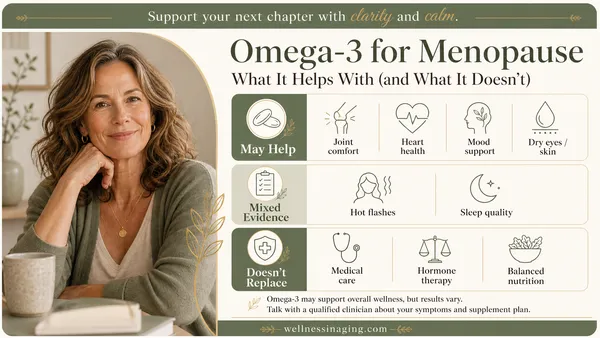
Omega-3 for Menopause: What It Helps With (and What It Doesn't)
Omega-3s have strong evidence for mood, joint pain, and heart health during menopause — but NOT for hot flashes. Here's the RCT data, the correct EPA vs DHA dose by symptom, and how to avoid rancid fish oil.
Read article →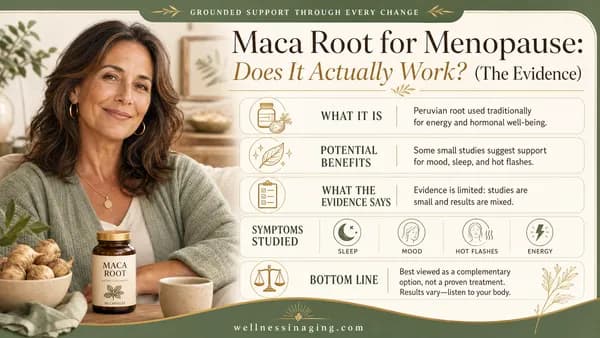
Maca Root for Menopause: Does It Actually Work? (The Evidence)
Maca root is widely promoted for menopause. Here's what the RCTs actually show — what it helps with (libido, mood), what it doesn't (hot flashes), and the correct dose.
Read article →